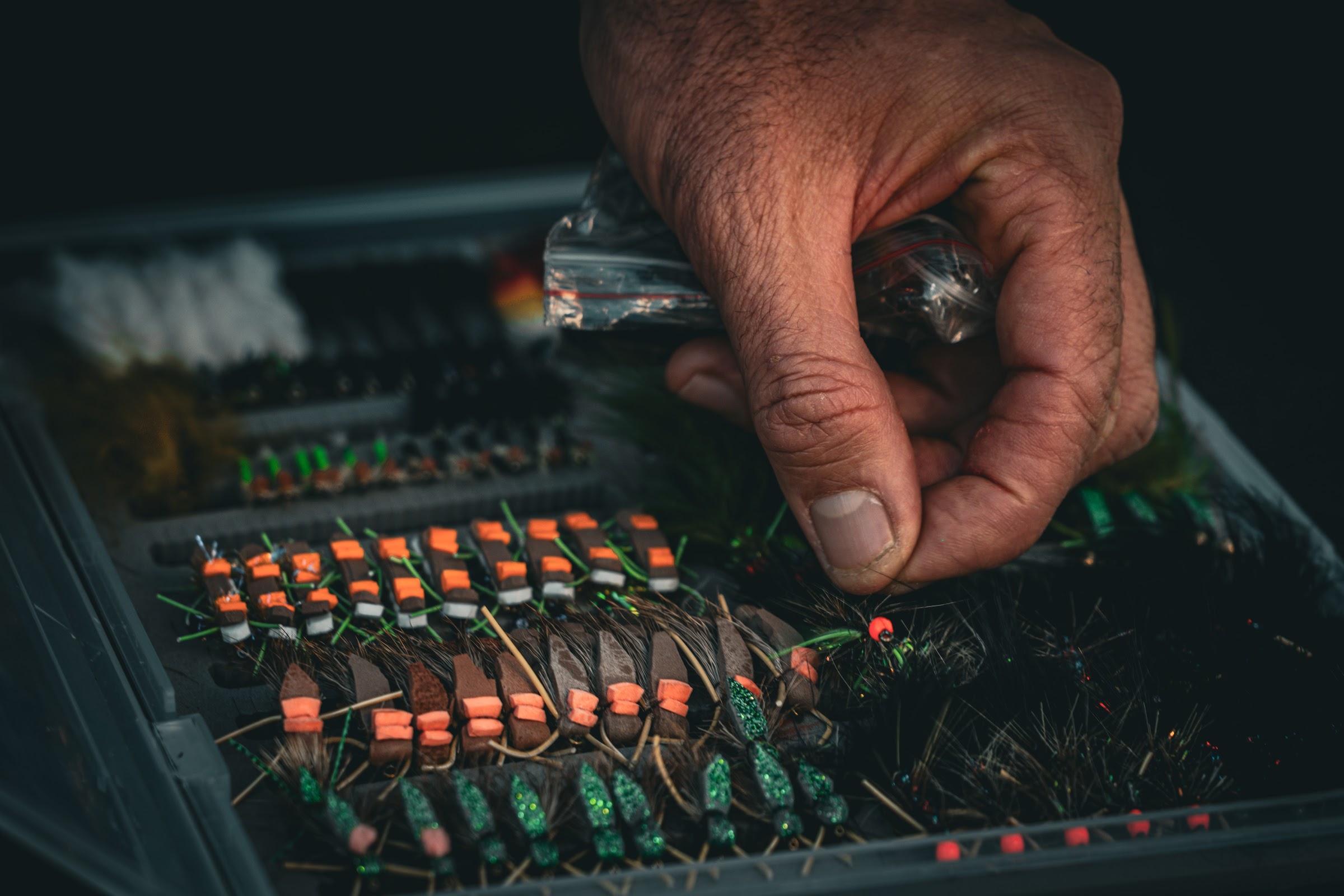
There are thousands of fly patterns out there, and behind every one of them a tyer who put time into it. It is a world without end, and that is exactly as it should be. But if I had to keep a single one for Argentine Patagonia, it would be this: the Chubby Chernobyl. Big, foam-bodied, with rubber legs that wriggle on the drift, it looks like nothing in particular, and that is precisely its strength. The trout here take it the way they would take a fat grasshopper blown off the bank.
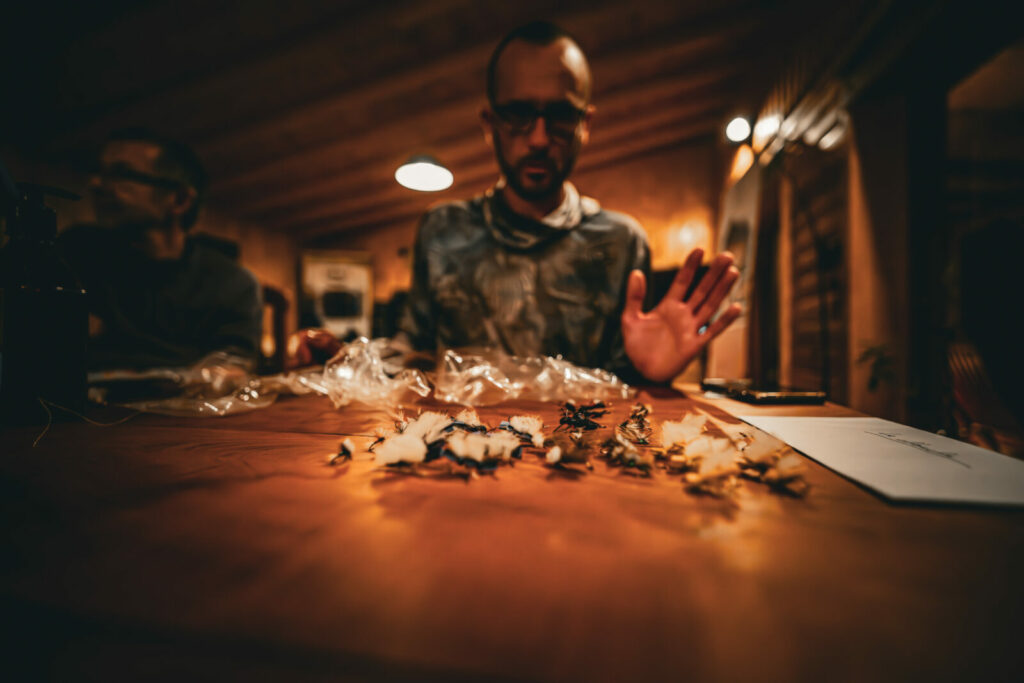
The one shown here is tied by Bruno, an Argentine friend, guide and instructor, and a tyer of rare talent. His work is worth a look on MENDO FLIES. His flies are the ones in my box when I fish here.
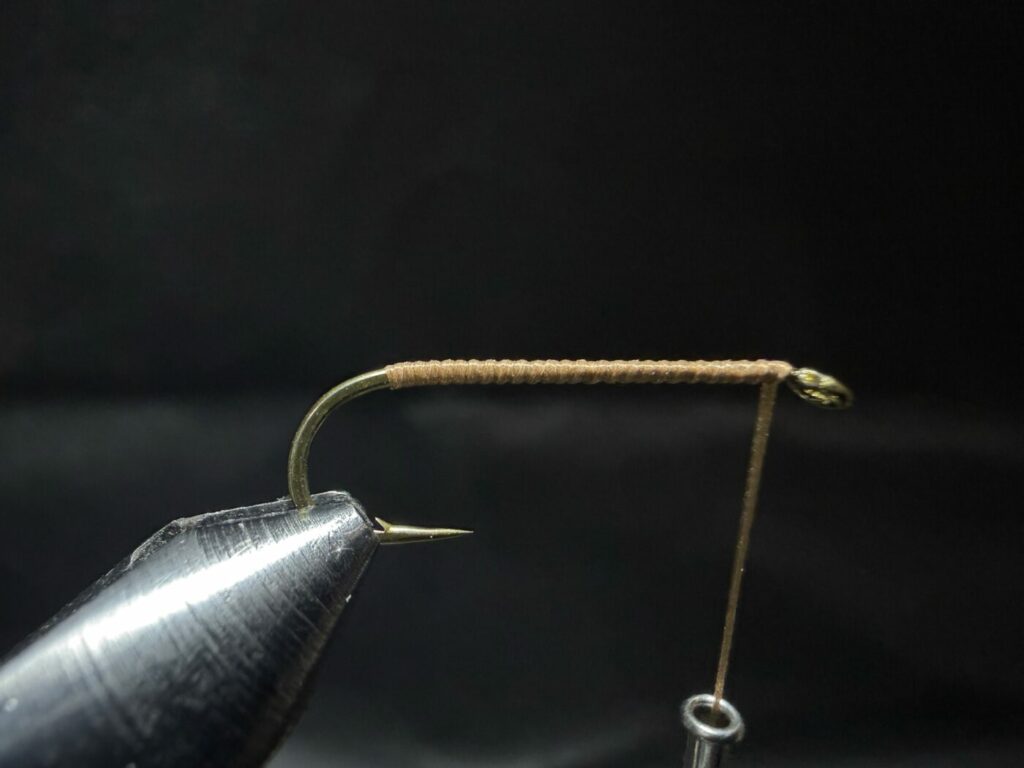
Bruno’s step by step
 1
1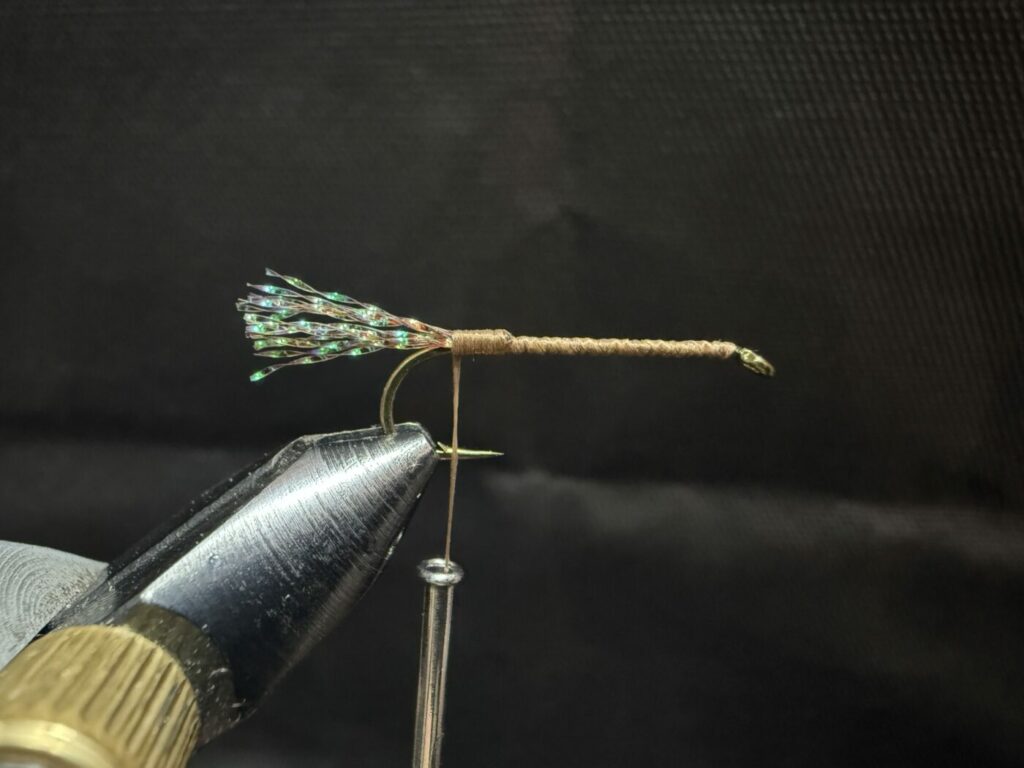 2
2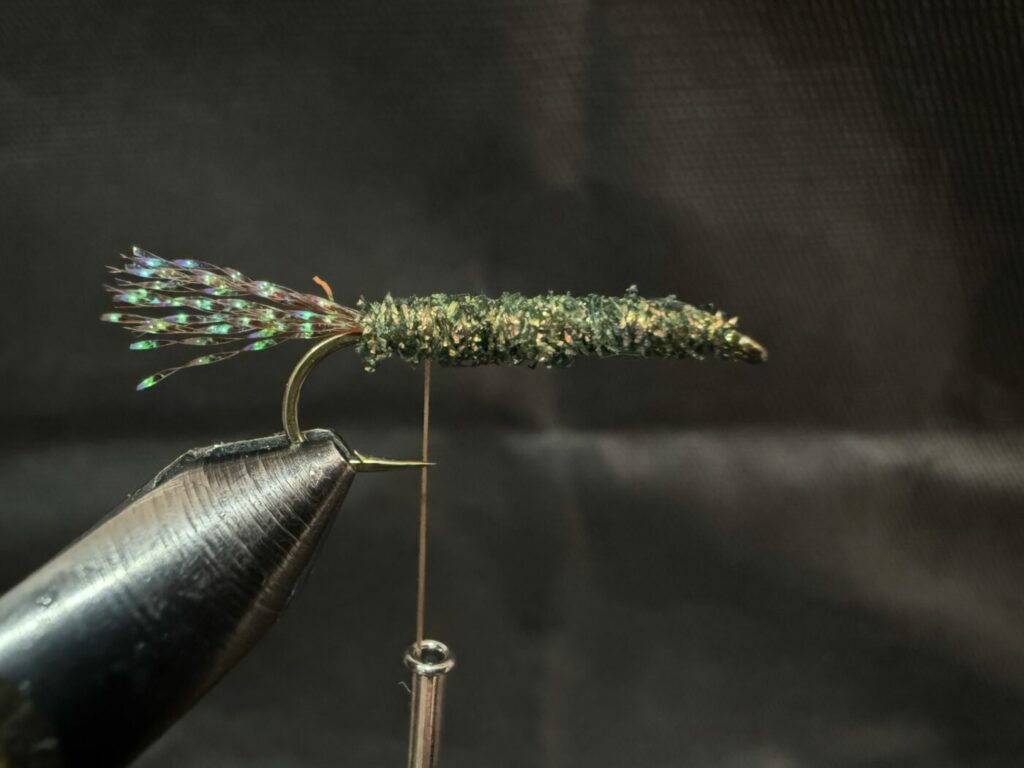 3
3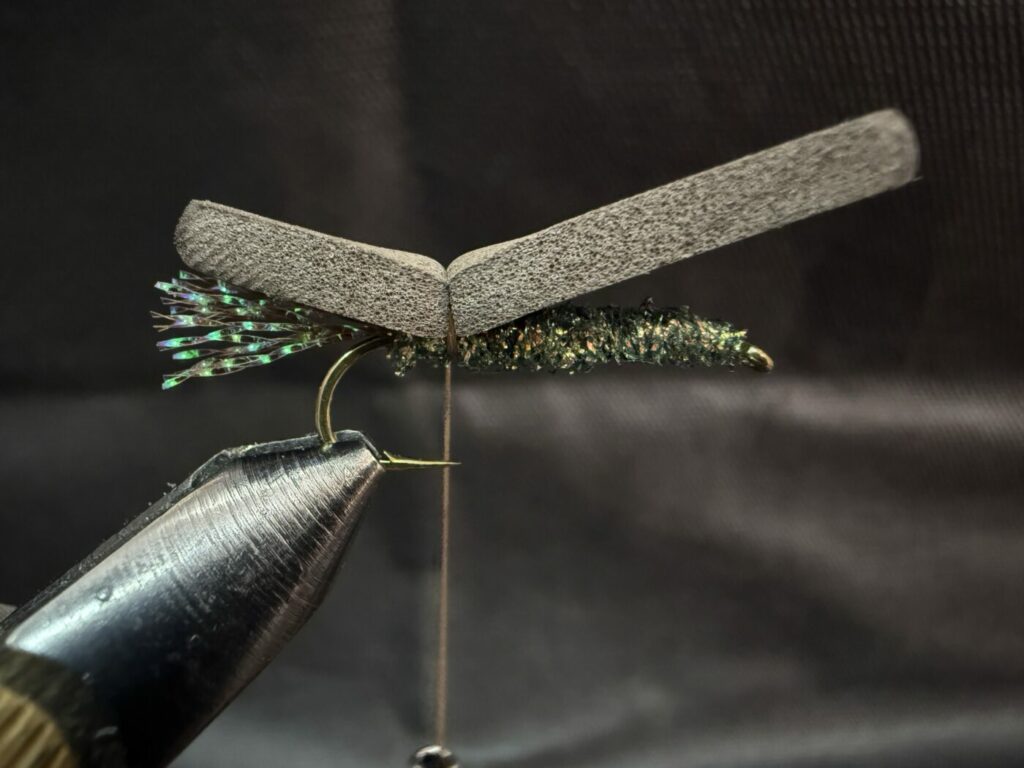 4
4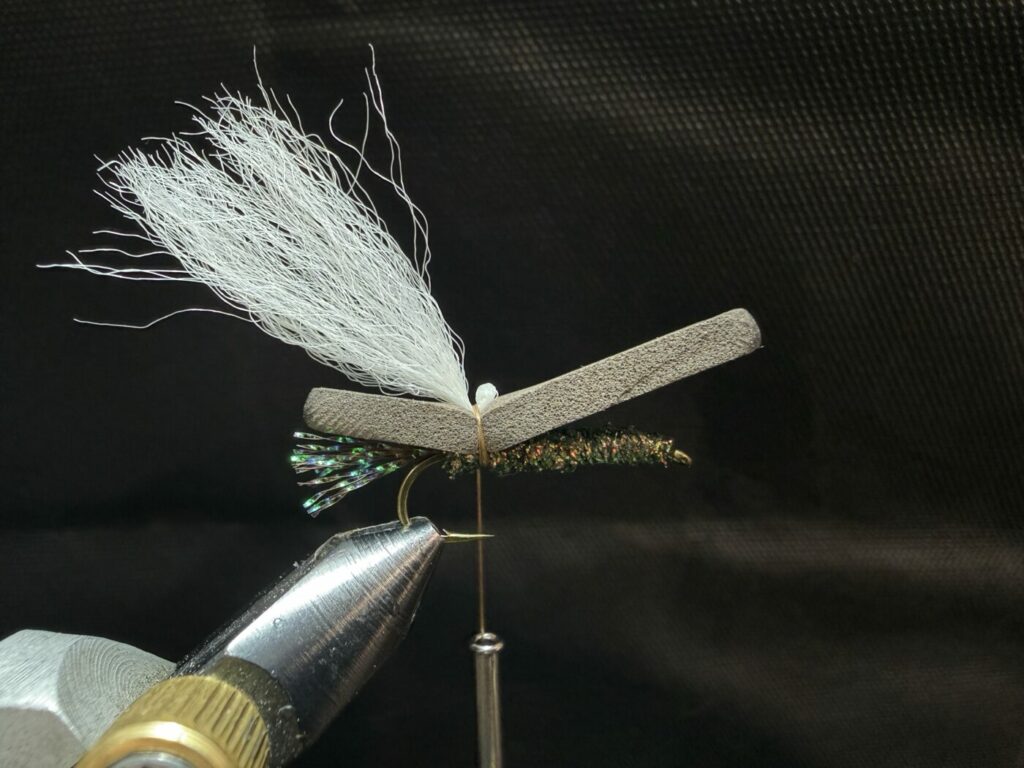 5
5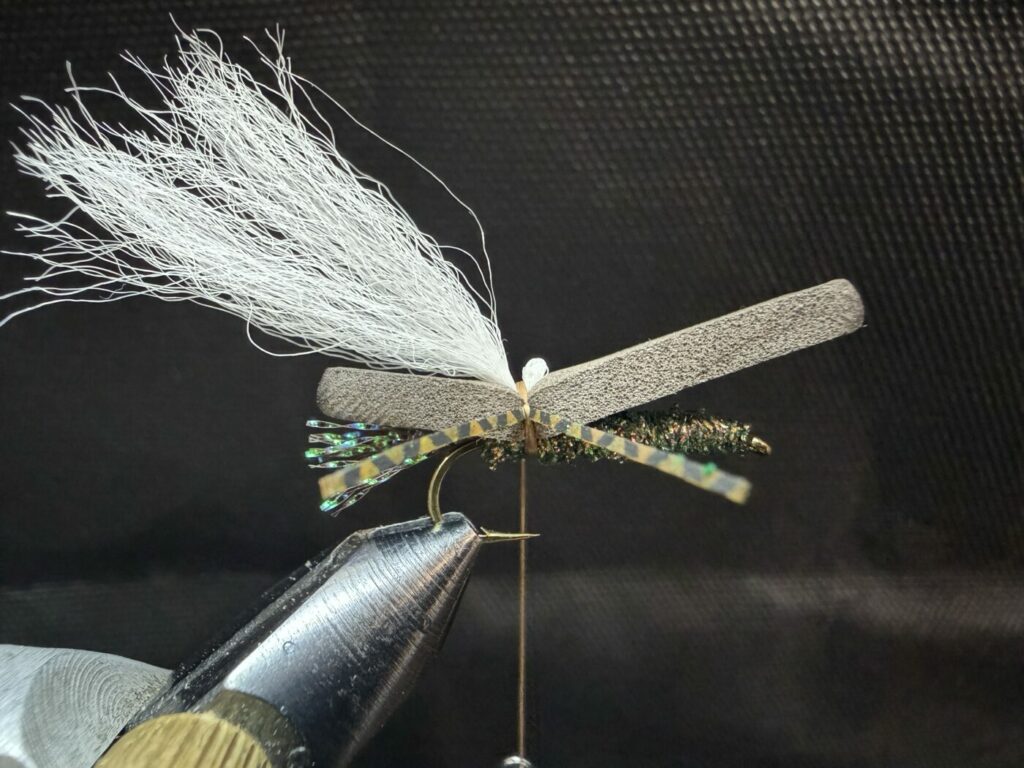 6
6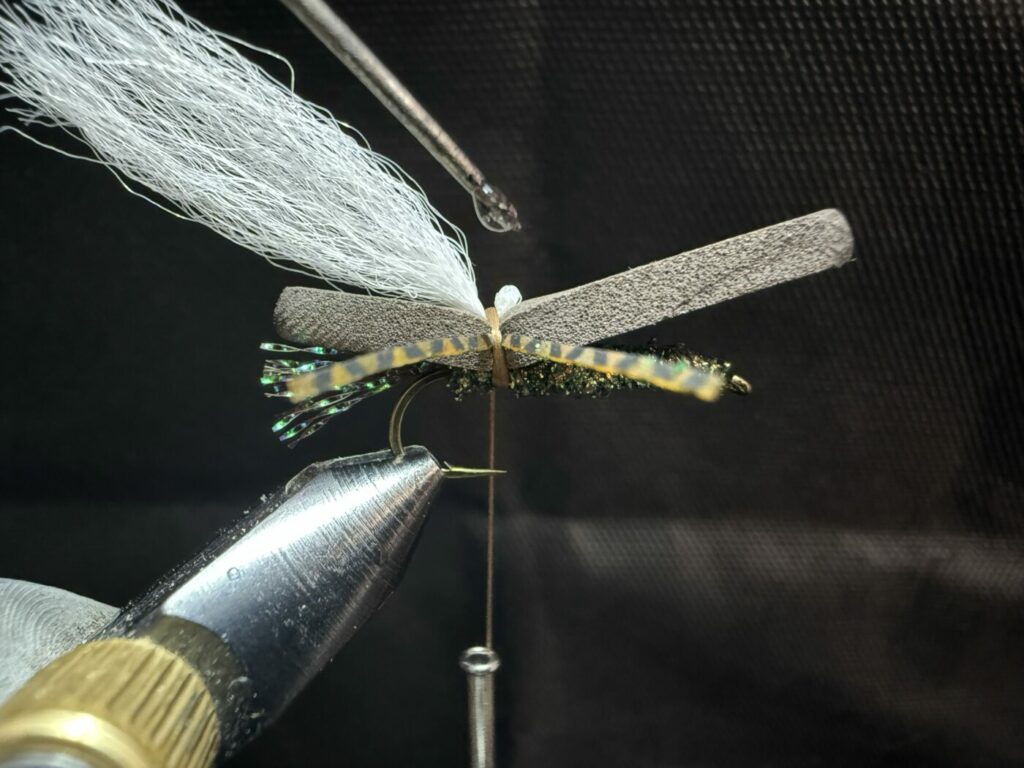 7
7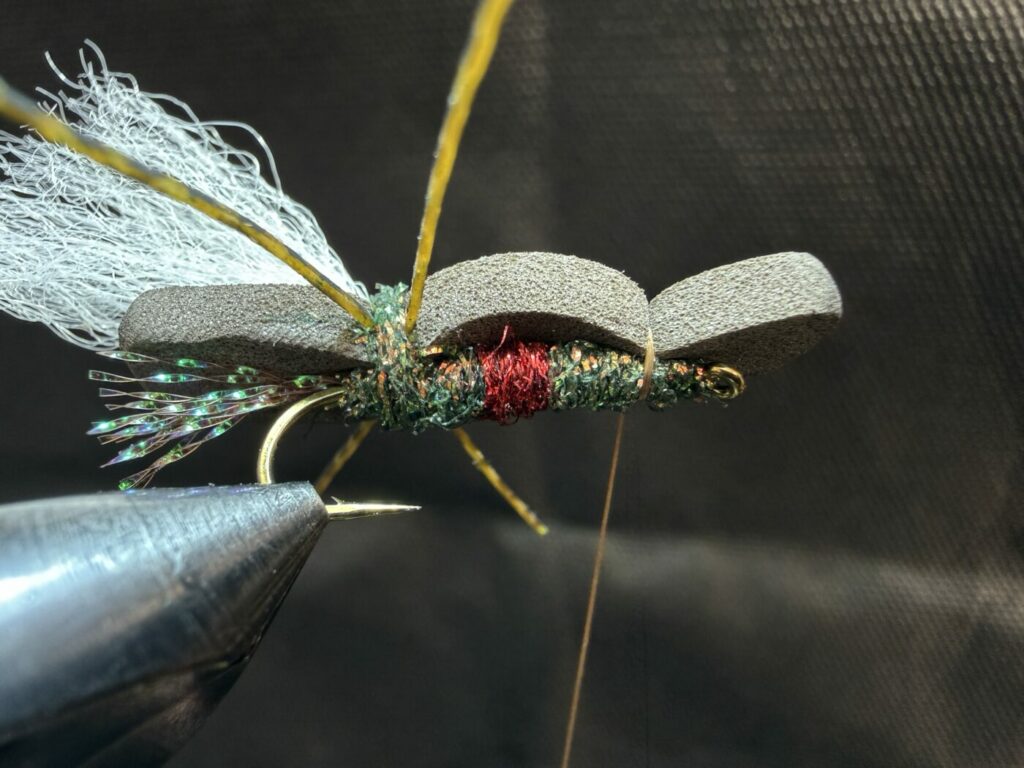 8
8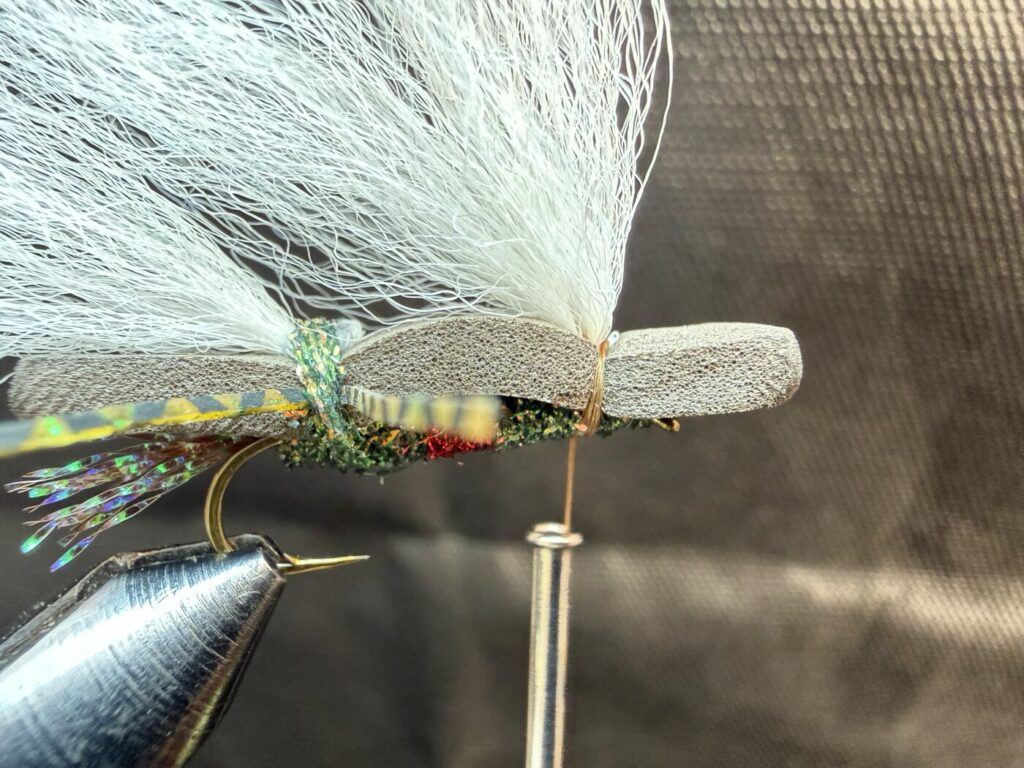 9
9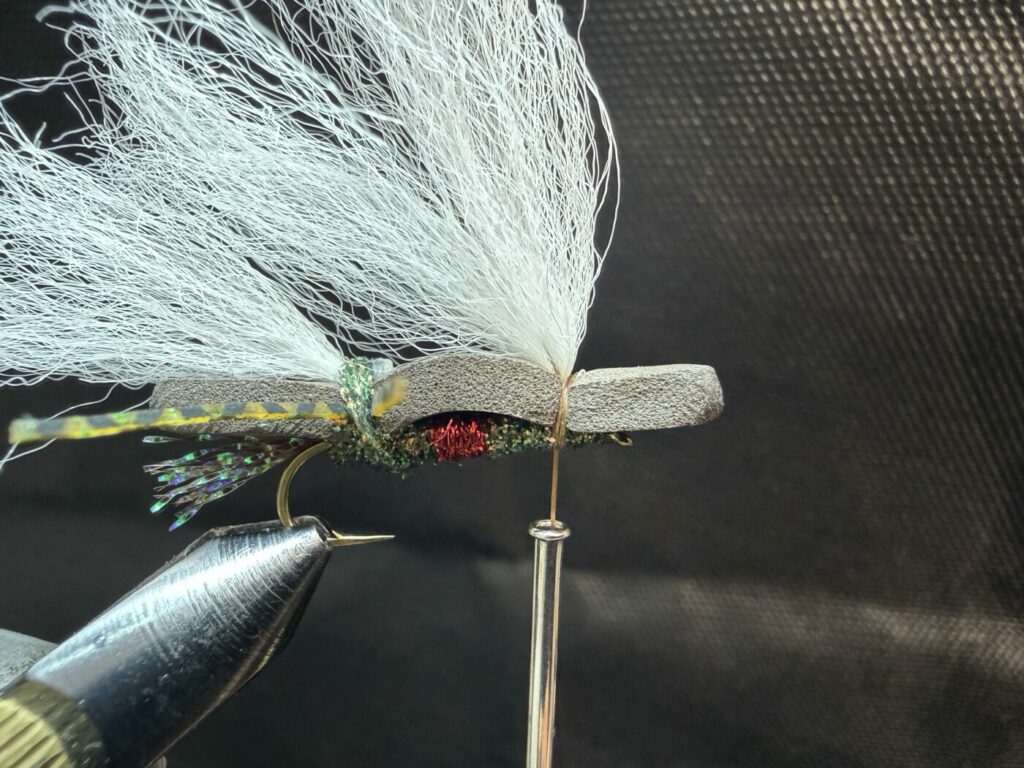 10
10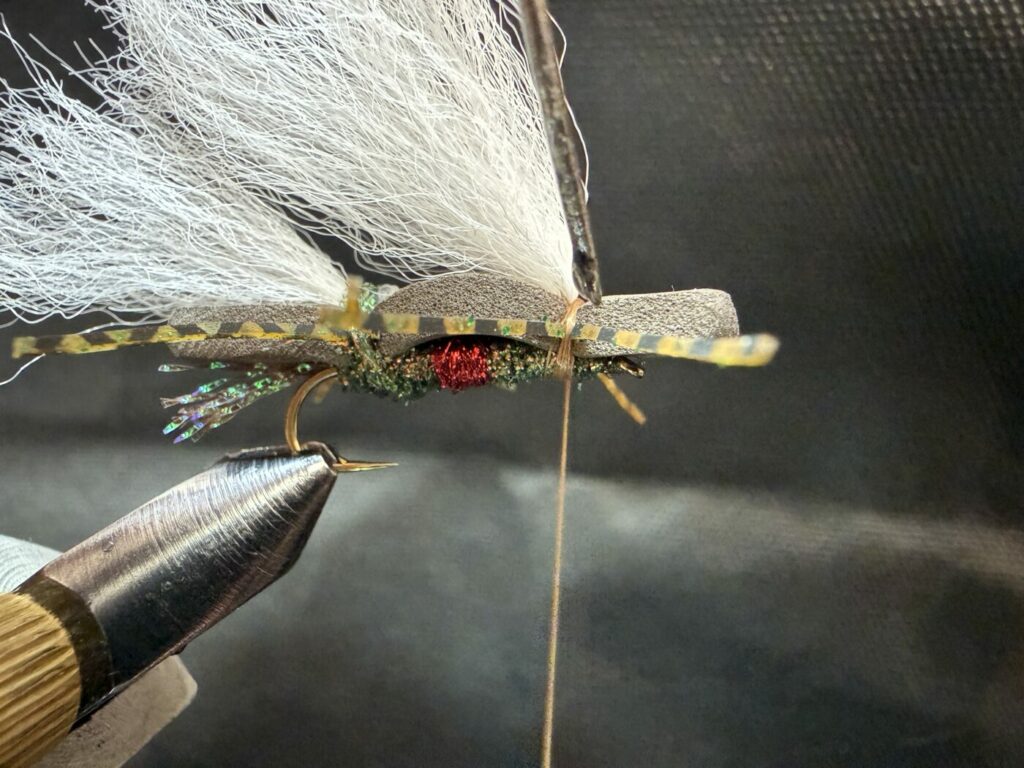 11
11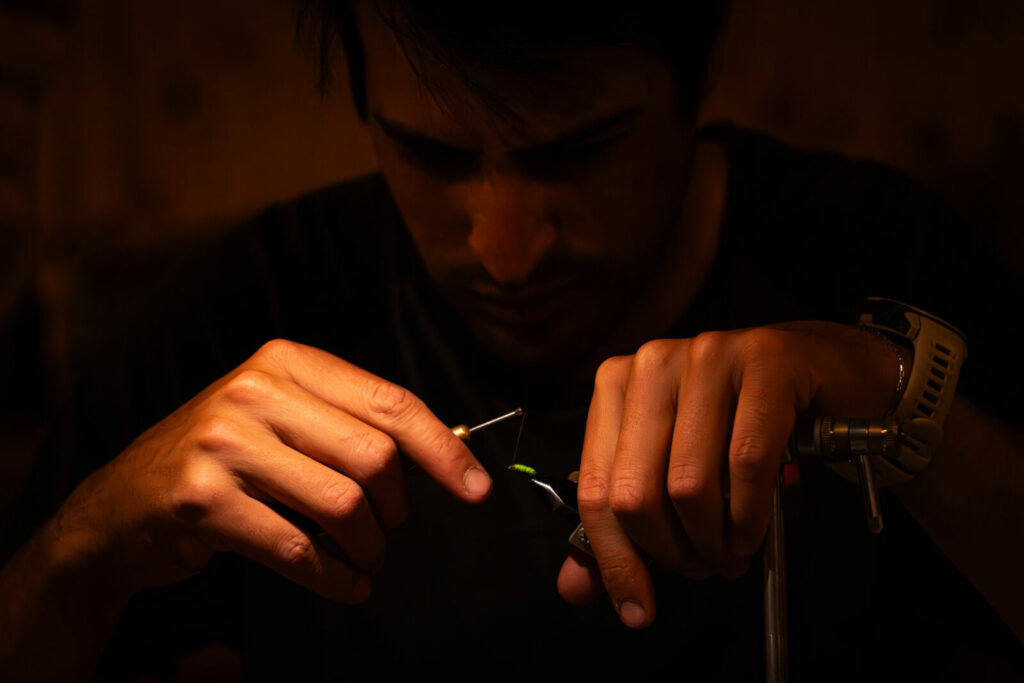
This is not one more tutorial. It is the hand of a tyer who fishes what he ties, and you feel it on the water.
The flies I take with me, and why
For dorado, I also use streamers tied by Bruno: heavy-duty patterns on extremely strong hooks. With that fish it is not a detail, it is the condition for bringing anything to hand.
For trout and grayling, in France as in plenty of places around the world, wherever there are salmonids, I fish the flies of my friend Youenn Le Fur, YL Flyfishing. Youenn is a very good angler, and he happens to be a fantastic tyer as well. I have fished his flies just about everywhere I have been lucky enough to travel, and they have never let me down.
Quality isn’t a luxury
Having good flies when you travel matters for two reasons. The first is obvious: giving the fish what it actually eats, with the right silhouette and the right proportions. The second is less so, and it is the one that costs you when you forget it: the hook.
In Patagonia, forget fine wire. Really. It would never cross your mind to go after marlin with a trout rod. Well, it is exactly the same thing. The odds of running into a big fish are real, and above all the trout here are wild, in full health, far more powerful than ours. A shank that opens on the first run is a memory walking away.
Same logic for tippet: I almost never go below 0.14 mm, roughly 3X here. In France, on the same species, I fish 0.09 or 0.10 mm, 5X to 6X. The gap says it all.
What goes in my box
A selection of big foam dries (Chubby, Madame X, hopper, beetle, ant), because Patagonia is terrestrial country. A few heavy nymphs to hold the strong currents, and sturdy streamers for the start and the end of the season. For summer, of course, small flies: CDC patterns, sedges and the more classic models we know back home. Do not forget small nymphs for sight fishing, and a few scuds. The rest is filled in on site: Bruno prepares kits for those who come, provided it is arranged in advance.
Frequently asked questions
- Which fly should come first for Argentine Patagonia?
- A big foam dry, Chubby Chernobyl style. Patagonia is terrestrial country: that pattern imitates everything that drops in the water, hopper, beetle or big ant.
- Why heavy-wire hooks in Patagonia?
- The trout here are wild, in full health and far more powerful than in France, with real chances of a big fish. A fine-wire hook opens on the first run.
- What tippet diameter should I use?
- Very rarely below 0.14 mm, about 3X, in Patagonia. In France, on trout and grayling, 0.09 to 0.10 mm, 5X to 6X, is sometimes enough: the gap says it all.
- Do you have to tie your own flies?
- Not necessarily. What counts is quality: right proportions, right materials, right hooks. Artisan tyers like Bruno (MENDO FLIES) or Youenn Le Fur (YL Flyfishing) do work that shows up on the water.
- Can flies be bought on site?
- Yes, a kit can be prepared there, but it has to be asked for in advance so it can be tied. More than the kit can be ordered.
Going further: the bag comes together with the essential gear for Patagonia, the dates are chosen in the best time to fly fish in Patagonia, and the setting is discovered in A northern Neuquén no one fishes. When your plan takes shape, we can talk it over on the fly fishing in Argentine Patagonia page.
Baptiste Conquet
State-certified fly fishing guide and instructor. I guide in Aveyron and Lozère, and design fishing trips to Argentine Patagonia, Jurassic Lake and the golden dorado waters.
Plan a trip with me →