People ask me the same question every winter, when the trout and grayling rivers back home are carrying dead leaves and the idea of a summer turned upside down starts to work on someone. When should you go? The short answer fits in two dates: from November to late April, with the heart of it beating from December to late March. The honest answer is longer. There isn’t one season in Argentine Patagonia, there are three, and they don’t tell the same story.
A season with three faces
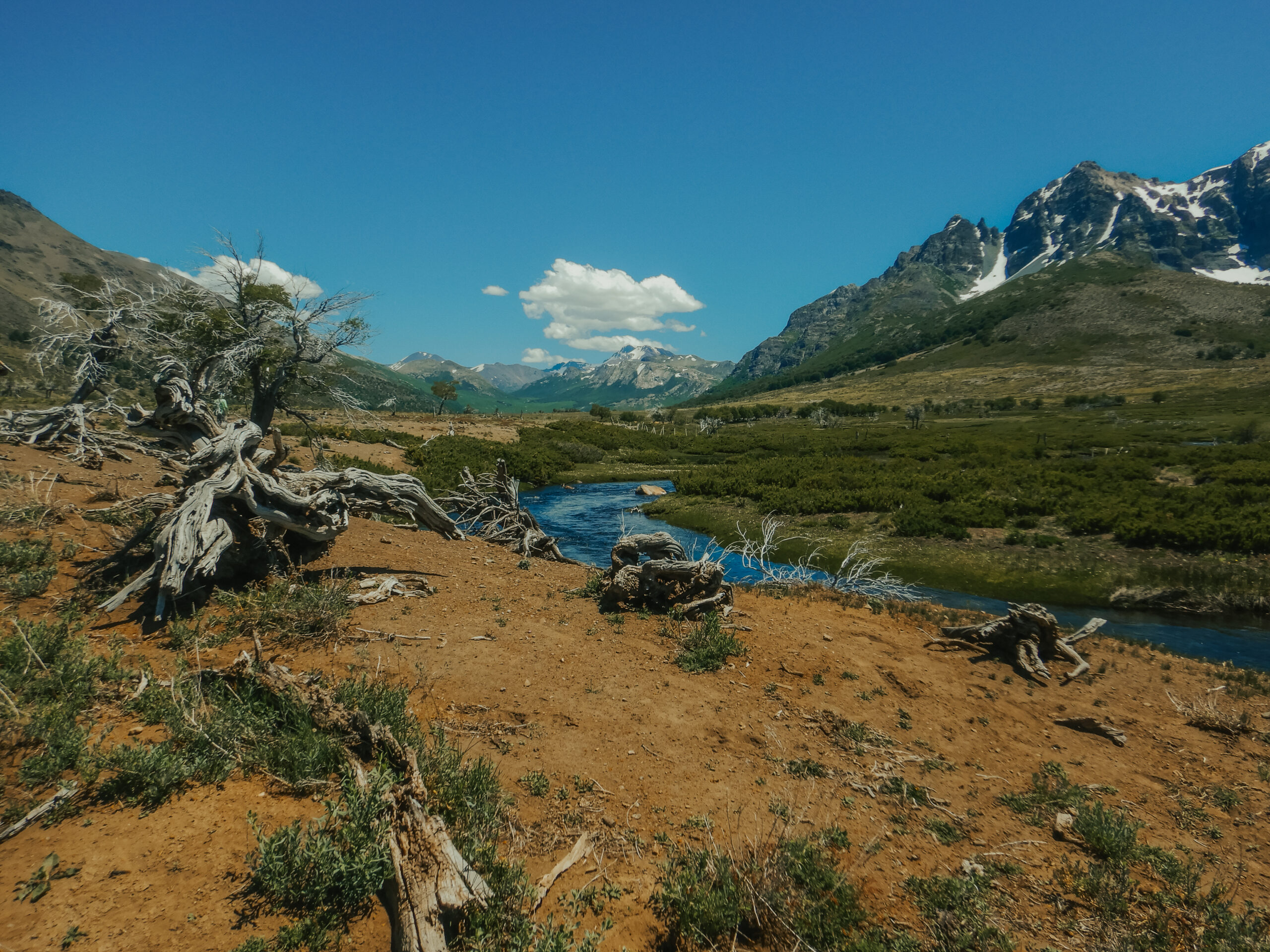
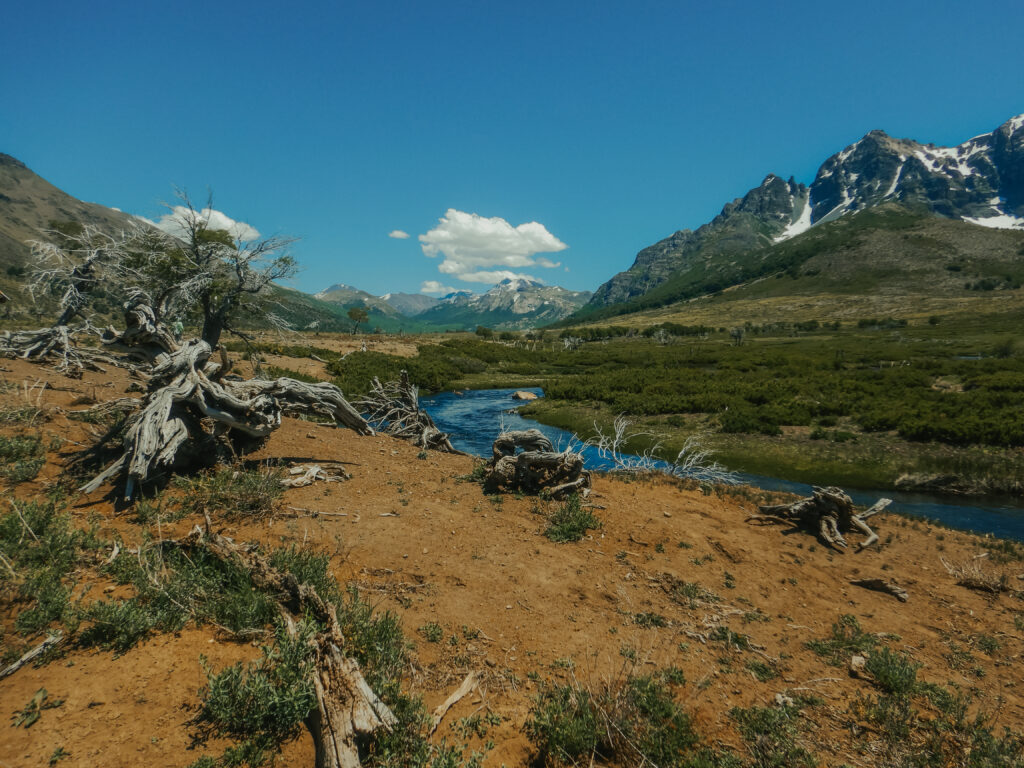
In the north of Neuquen province, the water opens in November and closes at the end of April. Between the two, the scenery changes faster than you’d think: the snowmelt, then the dry heat, then the first colours of the southern autumn. Catch-and-release is the rule on most rivers, which explains the density of brown and rainbow trout that surprises anglers coming from Europe. But I don’t think you come here for a number. You come for the water, for the silence of the big valleys, for that rare feeling of being a guest in a country that gets along just fine without us. The rest is choosing your moment. And that choice depends less on the calendar than on the angler you are.
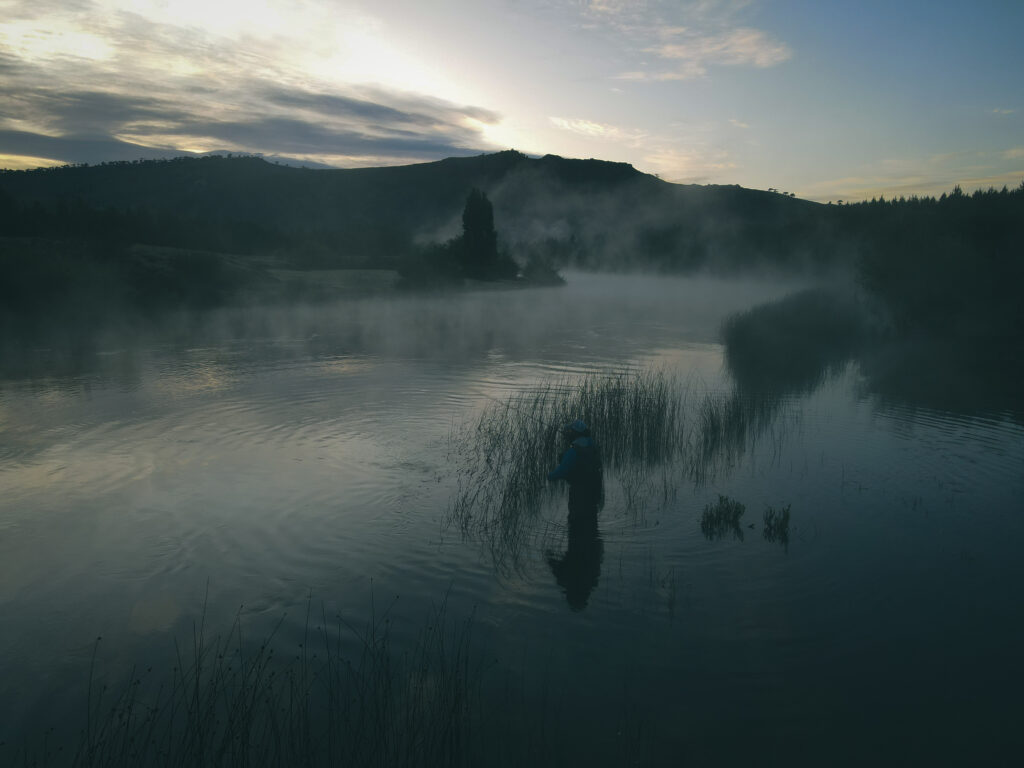
The early season — November, December
The water is high, sometimes tinged by the snowmelt, though that rarely lasts. It’s fishing of force and patience: a streamer along the undercut banks, a heavy nymph on a tight line in the fast seams. You prospect more than you cast far, looking for fish where the current eases. The big trout come out of winter hungry, and the fight is never won in advance. There’s hardly anyone on the water at this time, almost no one. You meet more horses than fishermen. The weather does as it pleases: a morning of open sky, an afternoon of hail, and the wind rising without warning. Those who like having the river to themselves, and don’t mind casting heavy, find something rare here.
The heart of the season — December to late March
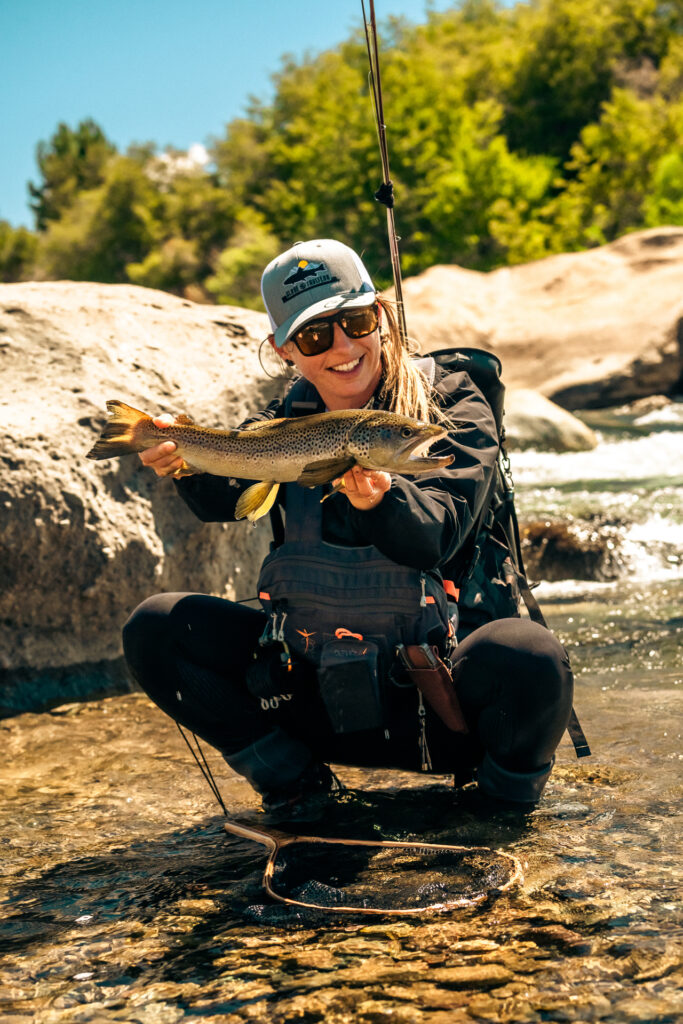
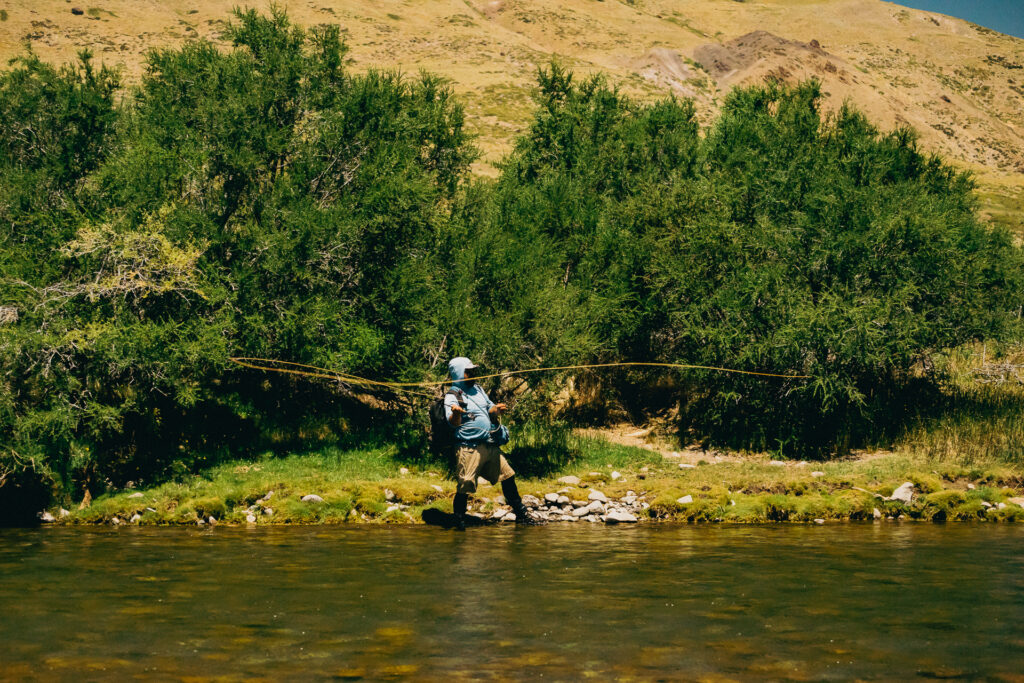
This is the Patagonia you picture before you come. The water drops and clears, the air warms, and the dry fly takes the stage. It’s the season of terrestrials: flying ants, hoppers, beetles fallen into the current, and those big foam attractors the trout come up for without much persuading. There are rises, discreet, under the branches and in the slow seams — not the frenzy of a European evening rise, but daytime fishing, by sight, patient, where you watch for the mouth that comes to break the surface.
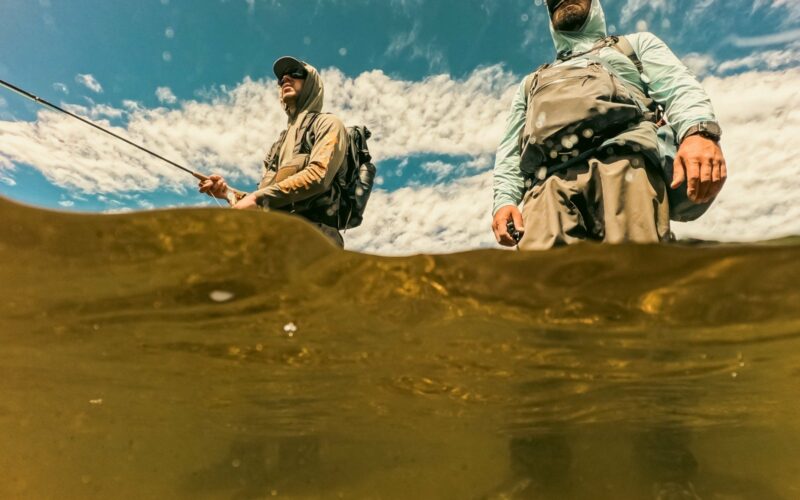
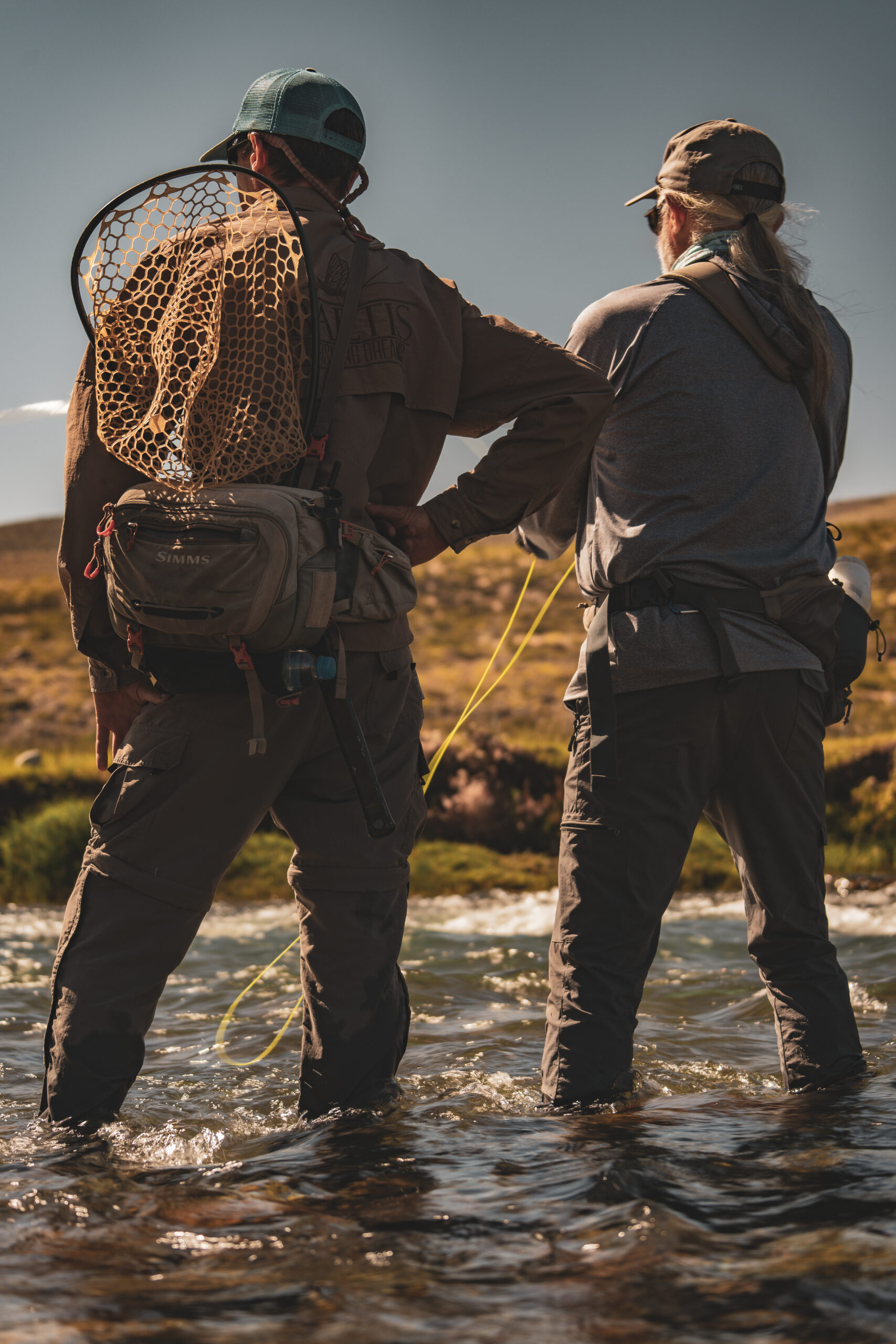
It’s also the season of wet wading, and it may be what I love most about the year. You leave the waders at the bottom of the pack, step into the river in shorts and wading boots, and the cool water climbs your legs while the sun beats on the back of your neck. There’s something in that contrast that borders on pure joy: the dry heat of the southern summer, the sharp cool of the current, and all around you an immensity that never ends. You wade for hours without thinking about it, you fill up on light and vitamin D, you forget the time and the rest. The waders are never far, all the same: a late-afternoon storm can change everything here in twenty minutes, and you’re glad to have them when the sky closes in. If you’re only coming once, and you dream of a trout rising in plain sight to clear water, this is where to set your dates. The catch, you’ll have guessed: it’s also when everyone else is thinking about it.
The late season — March, April
I have a soft spot for this time. The nights grow cooler and shorter, the land turns yellow and orange, and the browns get nervous as spawning nears. They hunt, they hammer the streamer, they take on colours I don’t know them to wear the rest of the year. You put away the small dries, bring out the bigger flies and the sinking lines, fish closer, more provoking. The light is low, raking, good for photographs and good for the soul. The world empties out, autumn settles in, and there remain those suspended days when you fish without watching the clock — the ones you remember long after, once winter has come back to our side of the world.
The wind, the guest you don’t invite
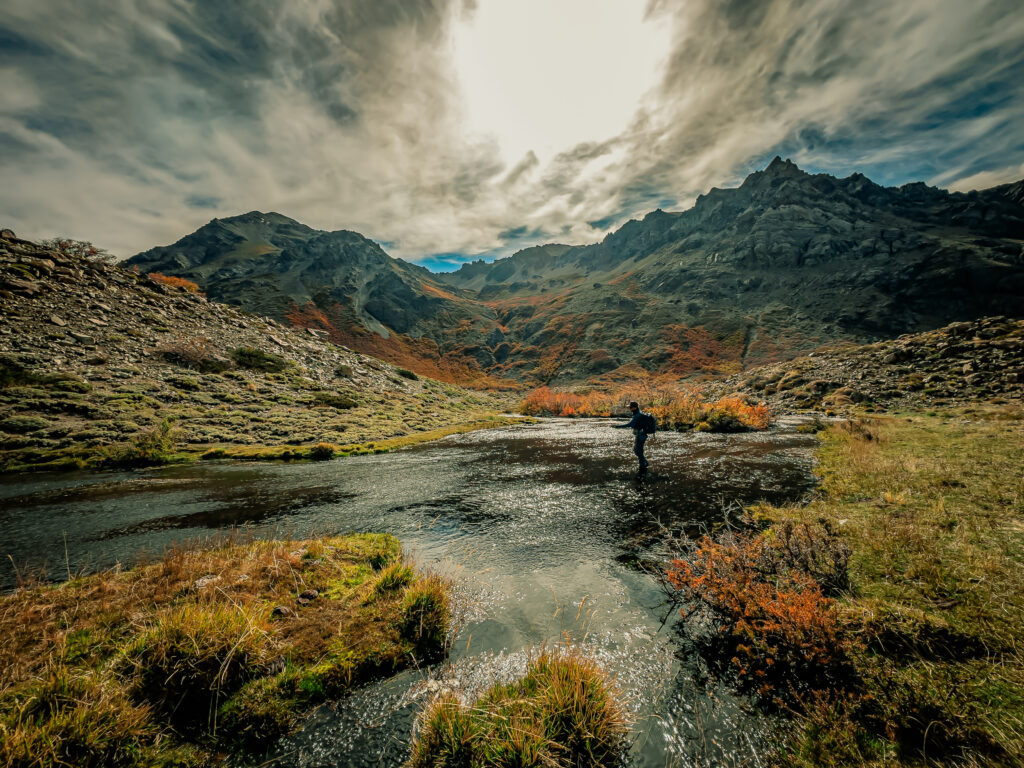
Let’s be honest: in Patagonia, the wind is part of the trip. It can lay a rod flat, turn a cast into a chore, and yet it’s the wind that ruffles the surface and puts the trout at ease. You learn to work with it, to set up with your back to the gust, to shorten the leader, to cast lower and firmer. It’s not an enemy. It’s a condition. Anyone who claims otherwise hasn’t spent a December afternoon in Patagonia.
Flies of the season
Every season has its flies. When the water is high, early on, I fish mostly the streamer — Woolly Bugger, leech, sparkle minnow — and the heavy nymph, black or brown stonefly, prince, weighted perdigones to hold the strong currents. At the height of summer it’s the season of terrestrials and big foam dries: Chubby Chernobyl, Madame X, hopper, cricket and grasshopper, beetle, ants, with a Royal Wulff or a parachute Adams when the rises turn fussy. In autumn you go back to the streamer, bigger, more provoking, for the browns getting ready to spawn. I’ve gathered the patterns I tie for Patagonia in my guide to gear and flies for Patagonia.
So, when to come?
It depends on what you’re after. The dry-fly purist aims for the heart of the season. The lover of adventure, solitude and fine fish will prefer the start, when the water is big and the banks deserted. Whoever chases autumn colours, quiet and big browns will wait for the end. None of these answers is better than the others — they simply don’t speak to the same angler. The best thing, when the dates start to take shape, is to talk it over: one well-placed week beats a month chosen at random.
Frequently asked questions
- What is the best month to fly fish in Argentine Patagonia?
- From December to late March, the heart of the season: clear water, dry-fly fishing, stable warm weather, ideal for wet wading. November and April are still excellent for those after solitude, southern-autumn colours and the chance of a trophy brown.
- Can you fish all year round in Patagonia?
- No. In northern Neuquen the season opens in November and closes at the end of April. The rest of the year is the southern winter, with the waters closed.
- Is the wind a problem for fishing in Patagonia?
- The wind is part of the trip. It complicates the cast but wakes the trout, ruffling the surface and dropping the big terrestrials onto the water. You adapt: positioning, a shorter leader, lower and firmer casts. The guides are there to help.
- Is it better to come at the start or the end of the season?
- The start (November-December) offers high water, streamer fishing and deserted rivers. The end (March-April) brings big aggressive browns before spawning and the colours of autumn. The heart of the season (December-March) remains the realm of the dry fly and sight fishing.
- Is catch-and-release compulsory?
- Yes, releasing fish is the rule on most rivers in the region. It’s what explains the density and size of the brown and rainbow trout.
To go further: how long to plan for is in How many days for a fly-fishing trip to Patagonia, the setting is revealed in A northern Neuquen no one fishes, and you’ll pack your bag with the essential gear for Patagonia. When your dates start to firm up, let’s talk it over on the fly fishing in Argentine Patagonia page.
Baptiste Conquet
State-certified fly fishing guide and instructor. I guide in Aveyron and Lozère, and design fishing trips to Argentine Patagonia, Jurassic Lake and the golden dorado waters.
Plan a trip with me →