Gear for the giant rainbows of Jurassic Lake
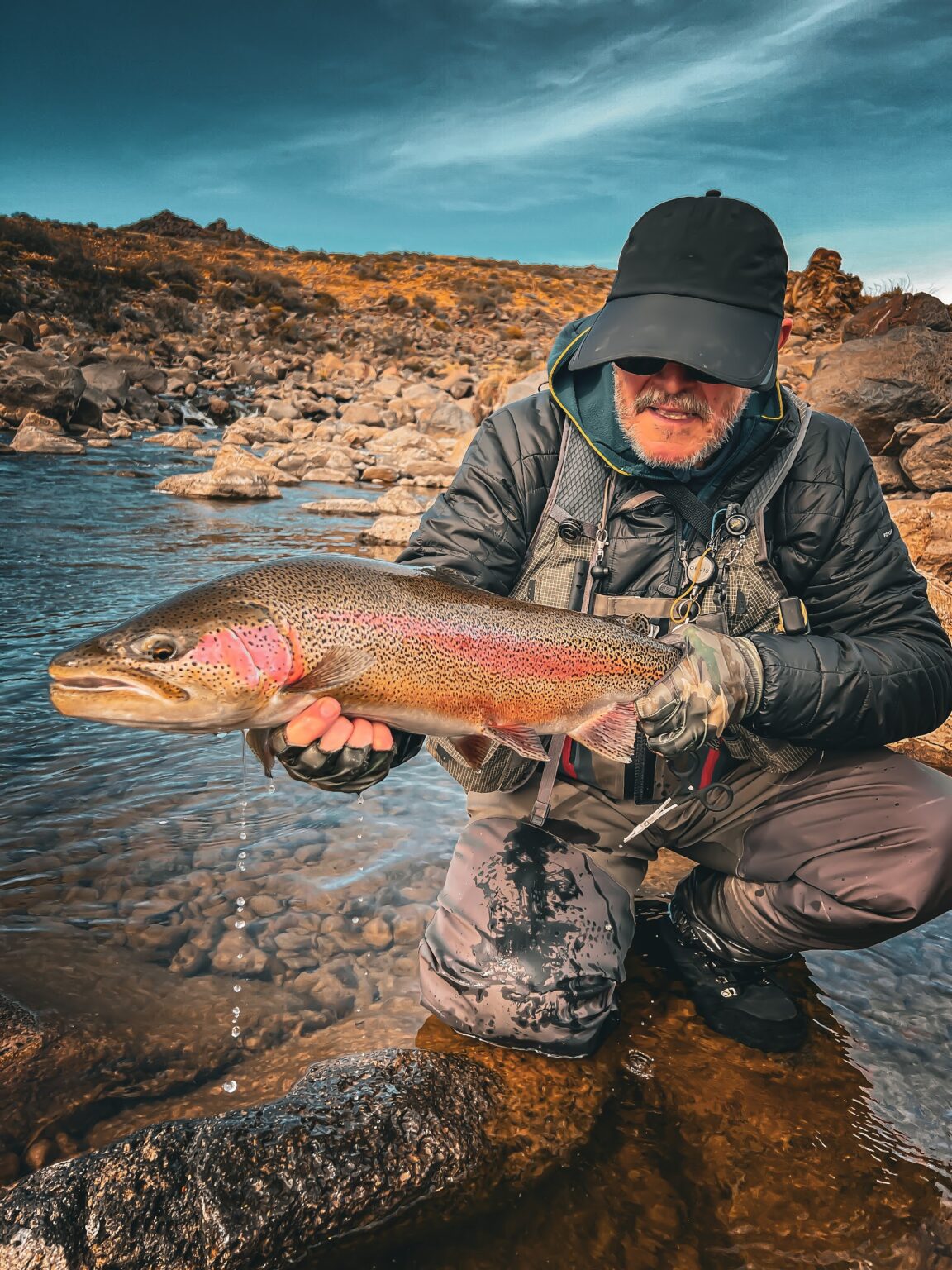
On the shores of Lago Strobel, the question is not whether you will hook a big fish. It is whether your gear will hold when it happens. The rainbows of Jurassic Lake regularly pass the ten pound mark, the wind blows without warning, and the weakest link in your bag gets found out fast. Here is what I prepare with my anglers before each stay, based on the lodge’s recommendations and on what I have seen hold, or break, out there.
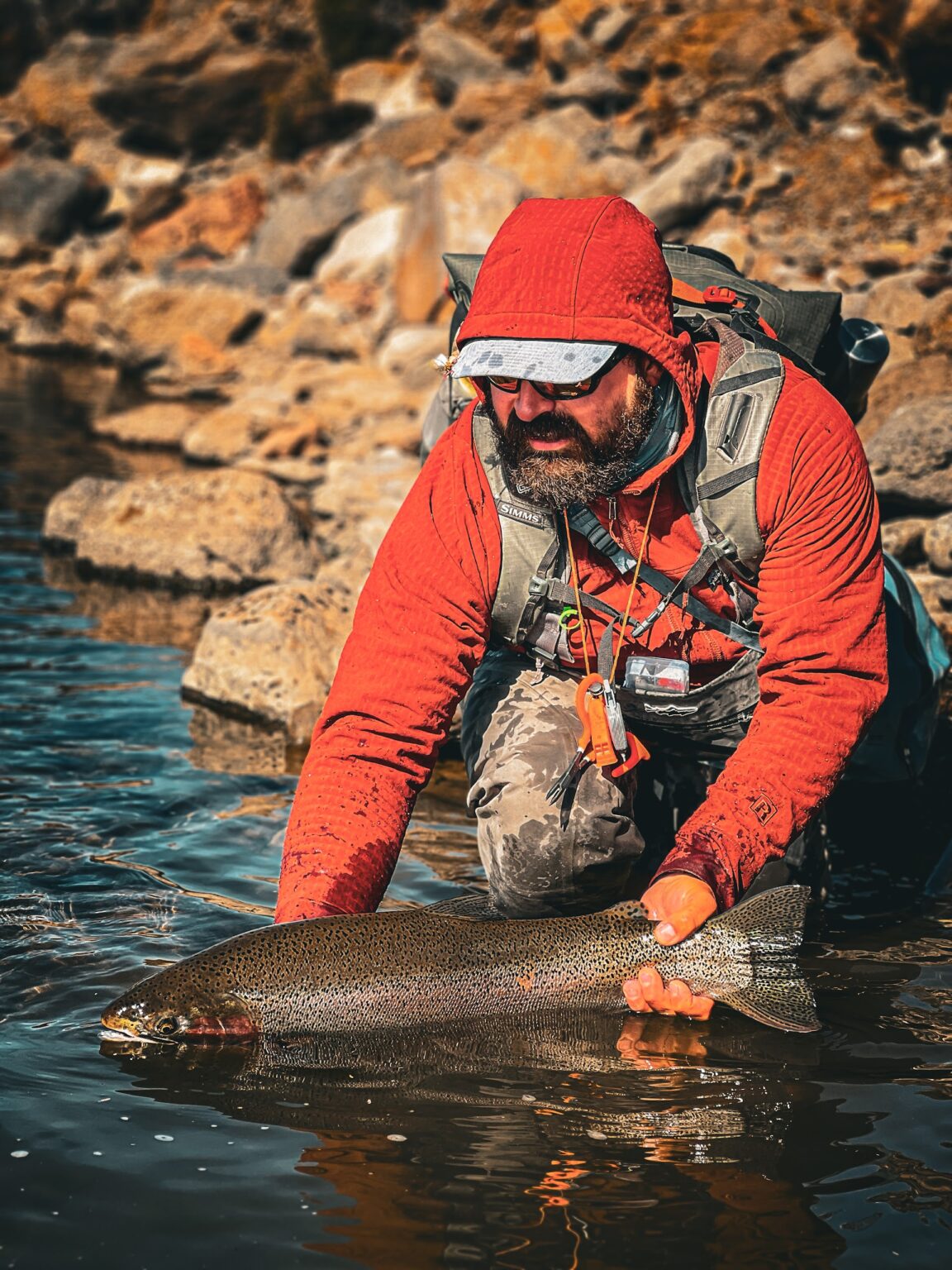
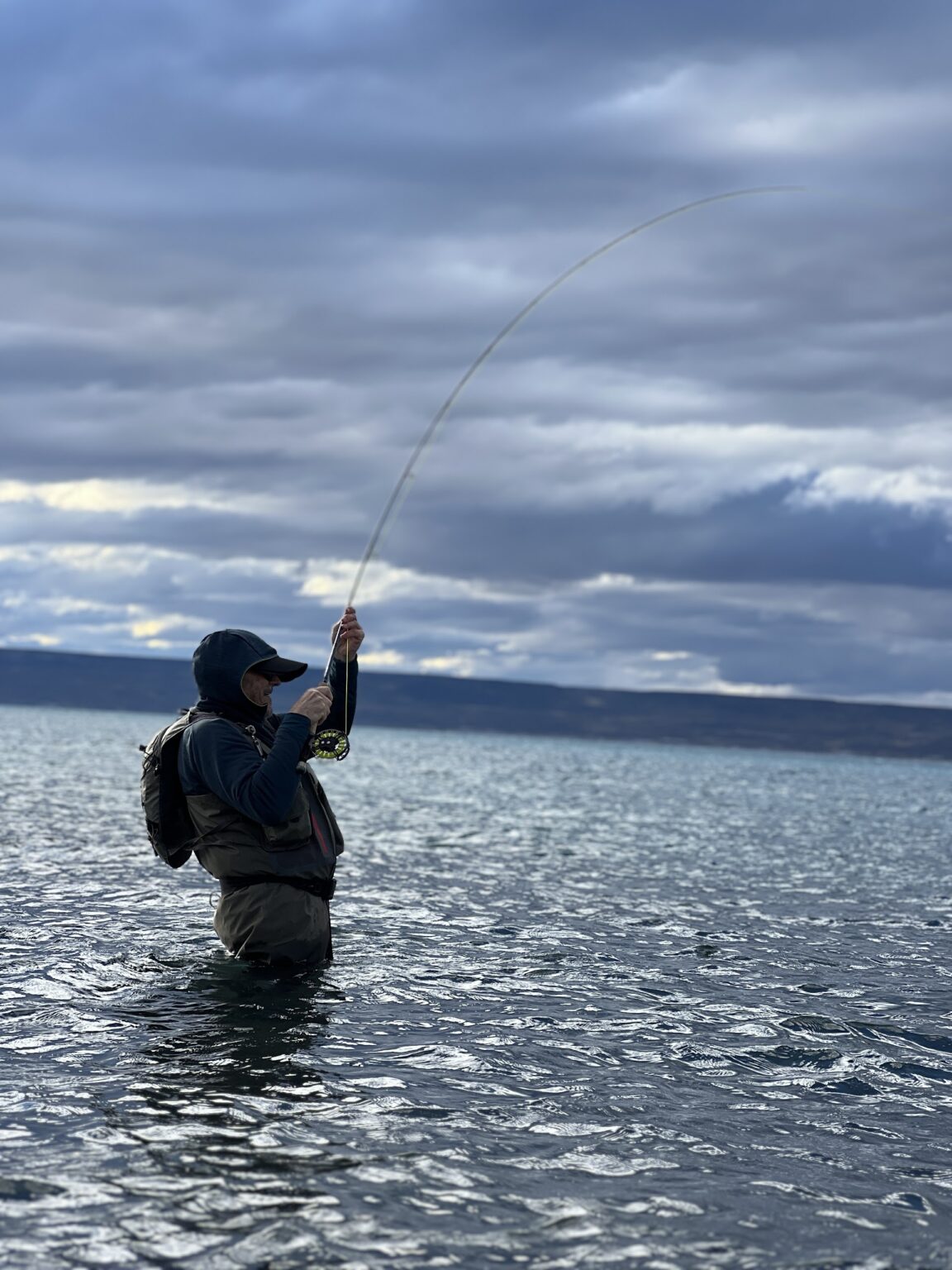
Two single-hand rods, not one
The base setup comes down to two rods. For the middle and upper sections of the Barrancoso river, a 4-5 weight with a floating line is enough: the fish run up from the lake and are fished close, sometimes on dries, in very little water. Bring a large arbor reel with backing, 9 foot leaders from 0X to 2X, and tippet from 0X to 3X.
For the lake and the lower river, step up to a 7-8: a WF floating line, an intermediate and a sink tip to cover every layer of water, and a large arbor loaded with 100 to 150 metres of 30 pound backing. That is not a luxury. A Strobel rainbow heading for open water does not stop out of politeness.
The two-handed rod, your answer to the wind
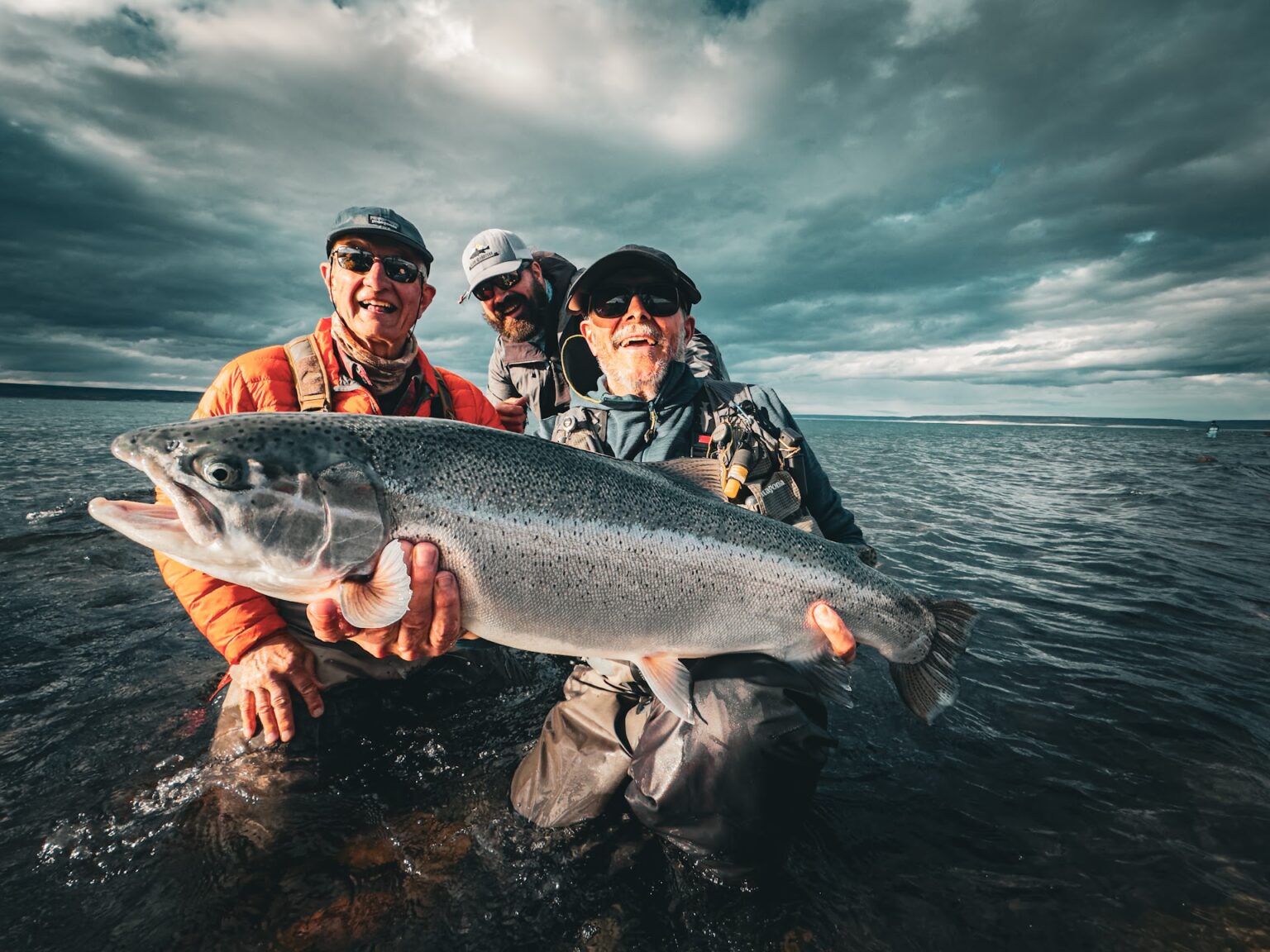
The wind is part of the scenery, to the point that a 7-8 two-handed rod changes the hard days: a scandi line, sink tips, 9 foot leaders in 0X or 1X. When the gusts shut down normal casting, the spey keeps laying it out cleanly. If you have been meaning to learn, this is the trip that justifies it.
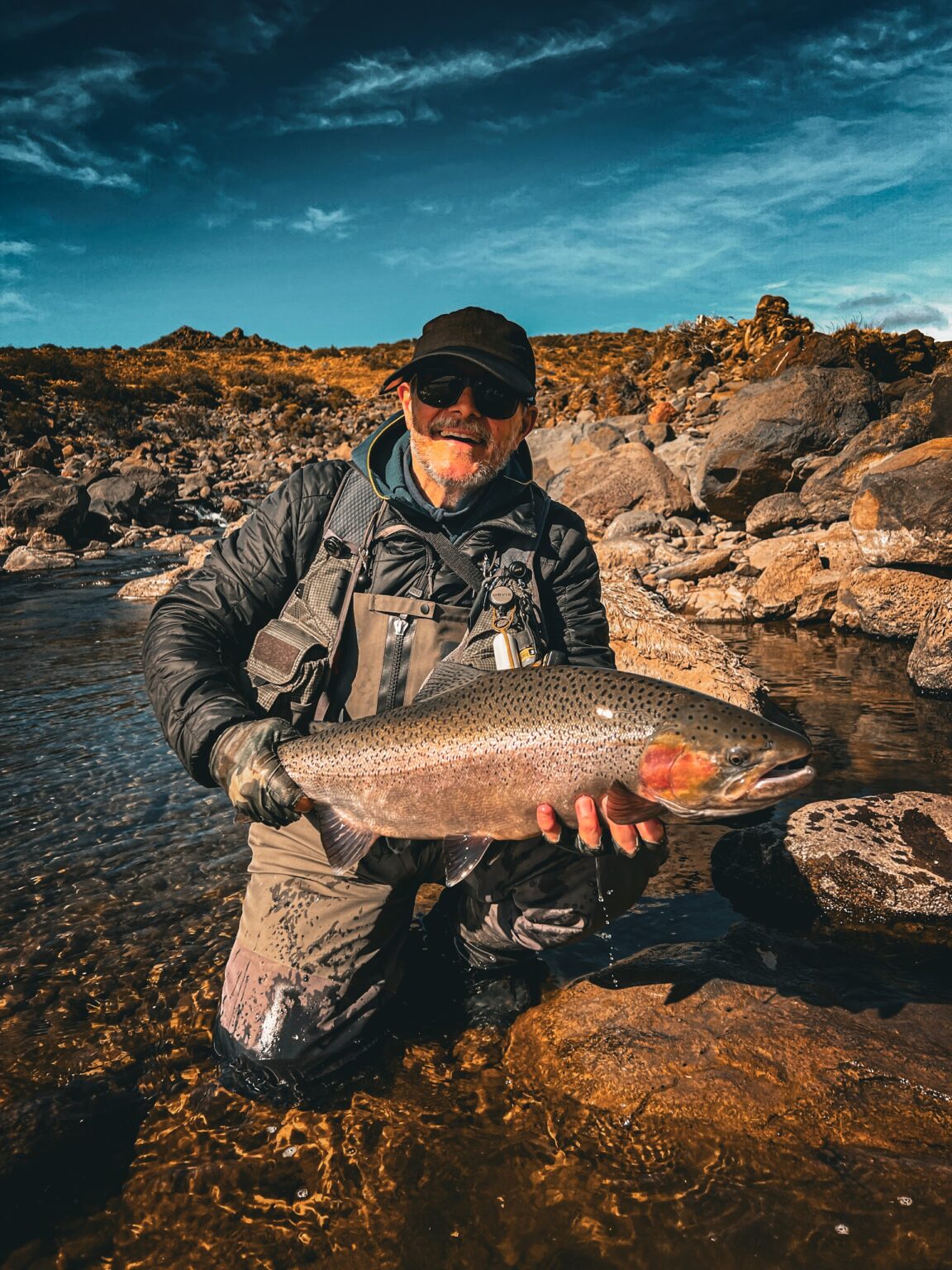
Waders and boots: the felt rule
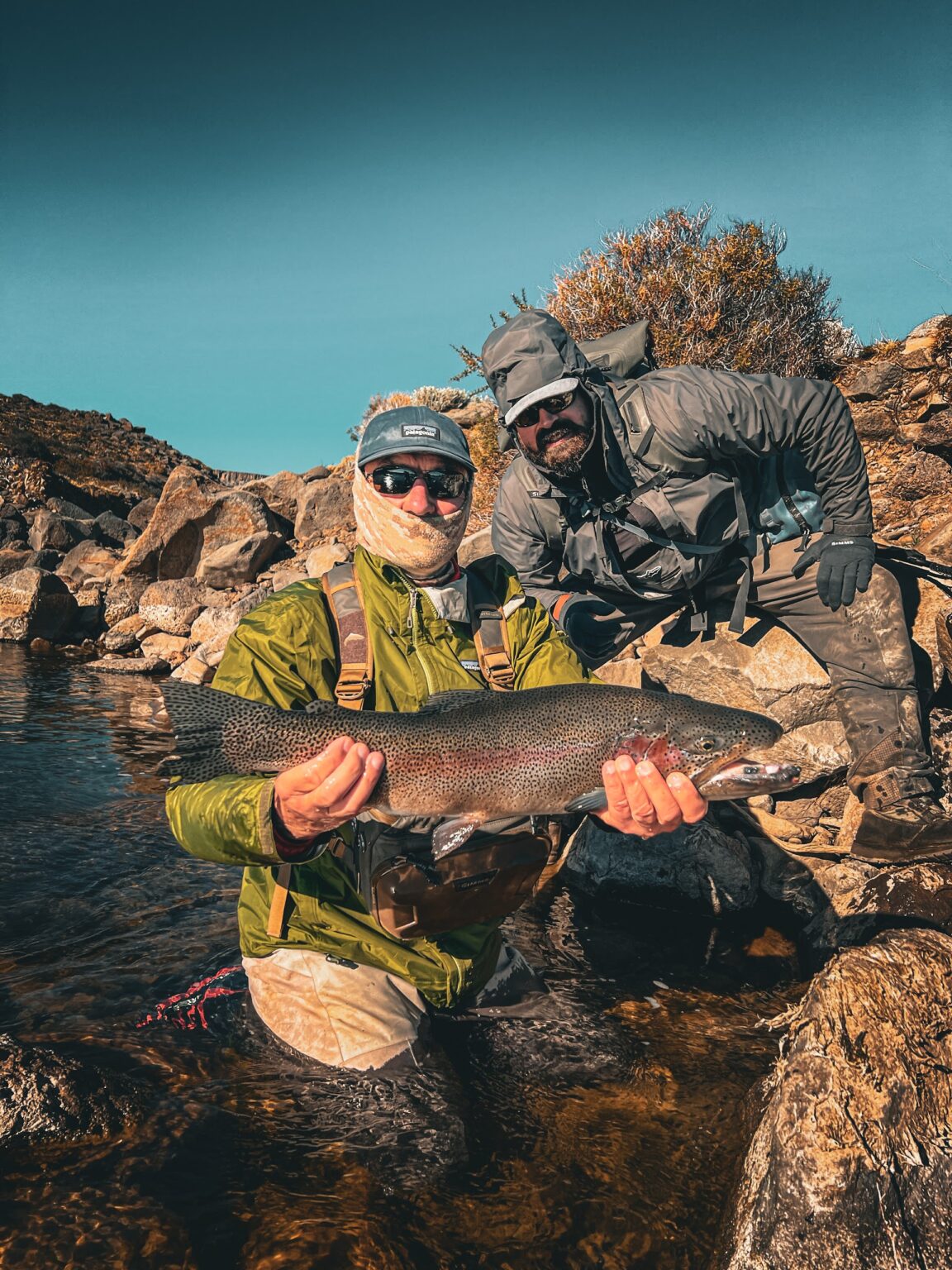
Lightweight breathable waders do the job. One absolute rule on these waters though: no felt soles. The lake and the river are didymo-free, and the lodge cleans every pair of waders and boots on arrival to keep them that way. Bring rubber soles, and arrive with clean, dry gear.
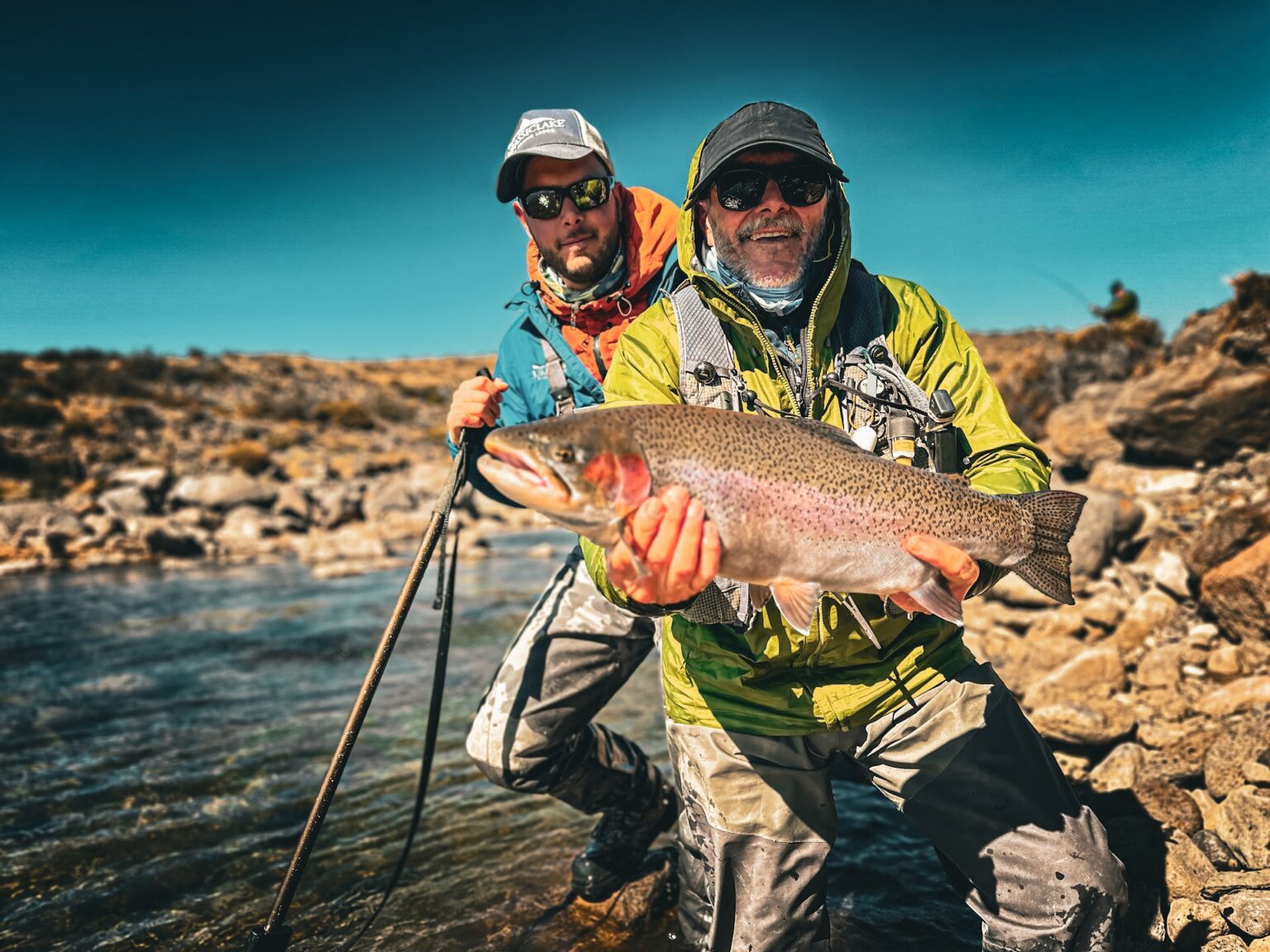
Flies: hooks that do not open
Strobel is fished with regular trout flies, simply bigger than usual, and above all tied on strong hooks. Cheap hooks open up, it is as simple as that.
On top: red or chartreuse Humpy in 10, white Wulff Irresistible in 10, Goddard Caddis in 10, black beetles in 12 on heavy hooks, rubber leg hoppers and chubbies in 10, and a few black midges in 14 for the quiet moments.
Under the surface: heavy nymphs first. Rubber leg Prince in 12, orange, pink, pearl or tan scuds in 10, San Juan Worm in 12, rubber leg Hare’s Ear in 12, all on reinforced hooks.
Streamers: balanced leeches in black, olive, chartreuse or claret in 6, black and peacock Wooly Bugger in 10, Yellow Yummy in 8, Buoface in black, olive or purple in 6.
One rule worth knowing: beads and egg rigs are not allowed on these waters. And if you would rather travel light, the lodge runs a fly shop with local patterns tied by the guides; ask me to reserve a kit of 24 to 48 flies before departure.
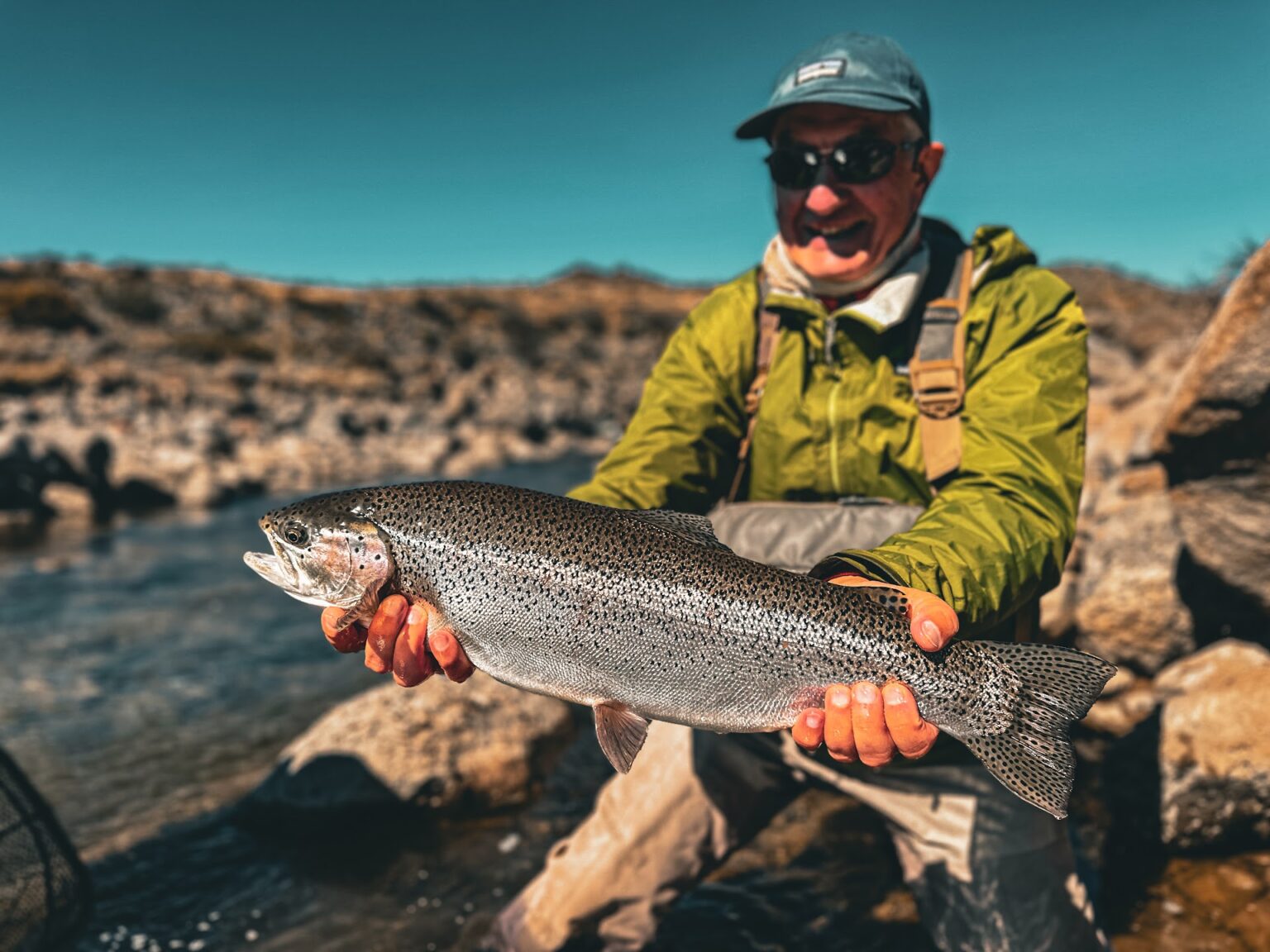
Dressing for the Strobel
The Strobel plateau earns its reputation: hard sun at altitude, wind, big temperature swings within a single day. The answer is three layers: a breathable base, a fleece or down jacket, and a waterproof windproof shell on top. Add a cap and a beanie, a neck gaiter, light gloves for cold mornings, polarised glasses to spot fish in the waves, and serious sunscreen: at this altitude, under this sky, the sun forgives no more than the trout do.
Frequently asked questions
- If I bring only one rod, which one?
- The 7-8 with a floating and an intermediate line. It covers the lake, the bay and the lower river, where the biggest fish are caught.
- Are felt soles really banned?
- Yes. The Strobel waters are didymo-free and the lodge intends to keep them that way. Rubber soles only, and clean gear on arrival.
- Can you buy flies at the lodge?
- Yes, the lodge fly shop carries local patterns tied by the guides that you will not find in any store. The simplest option is to ask me for a reserved kit before you arrive.
This list completes the preparation for the Jurassic Lake fishing trip. For the rest of the bag, the Patagonia gear guide still applies. And for a reserved fly kit or a spare rod, write to me before departure.
Gear: what you really need to fly fish for golden dorado
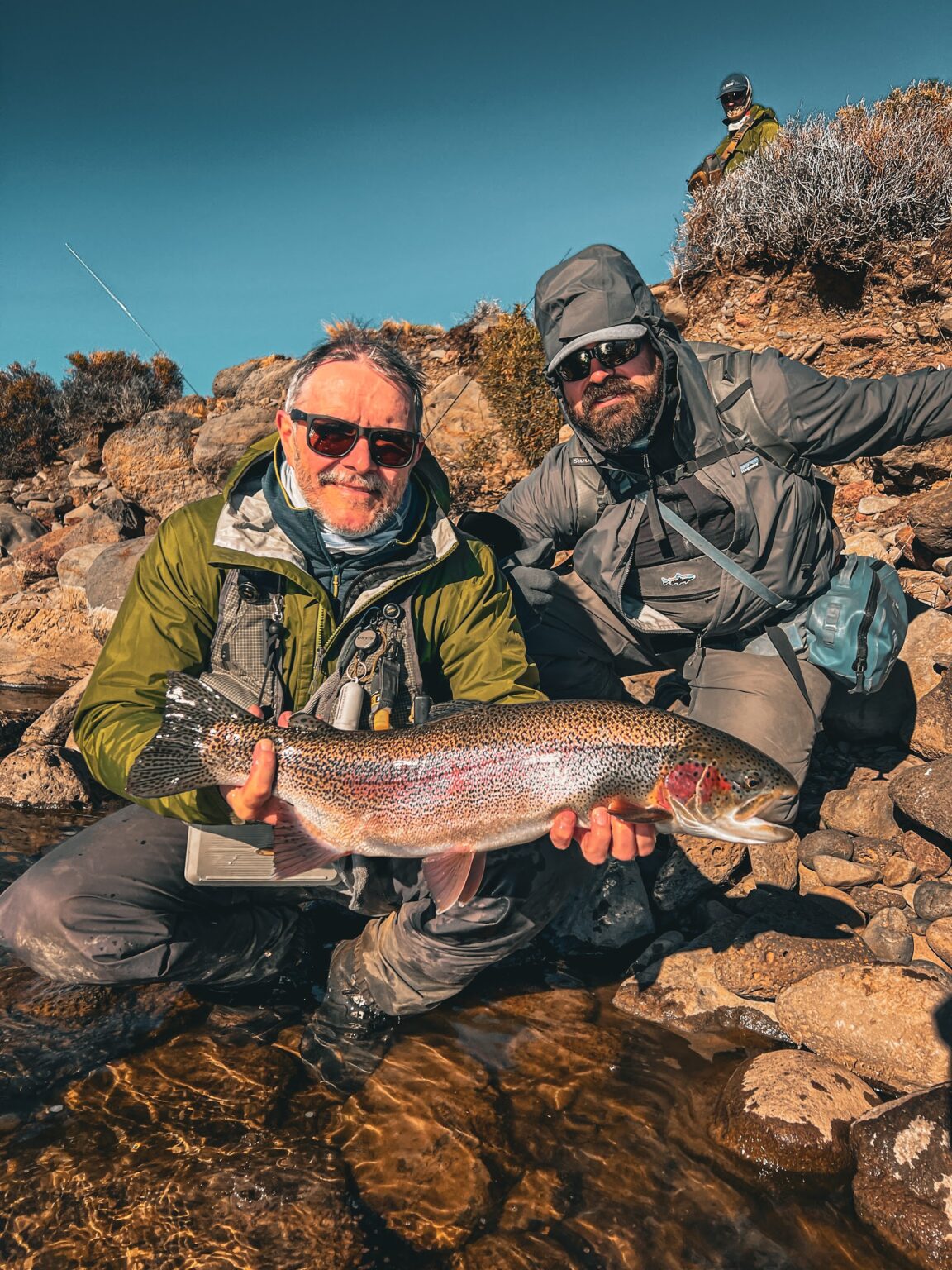
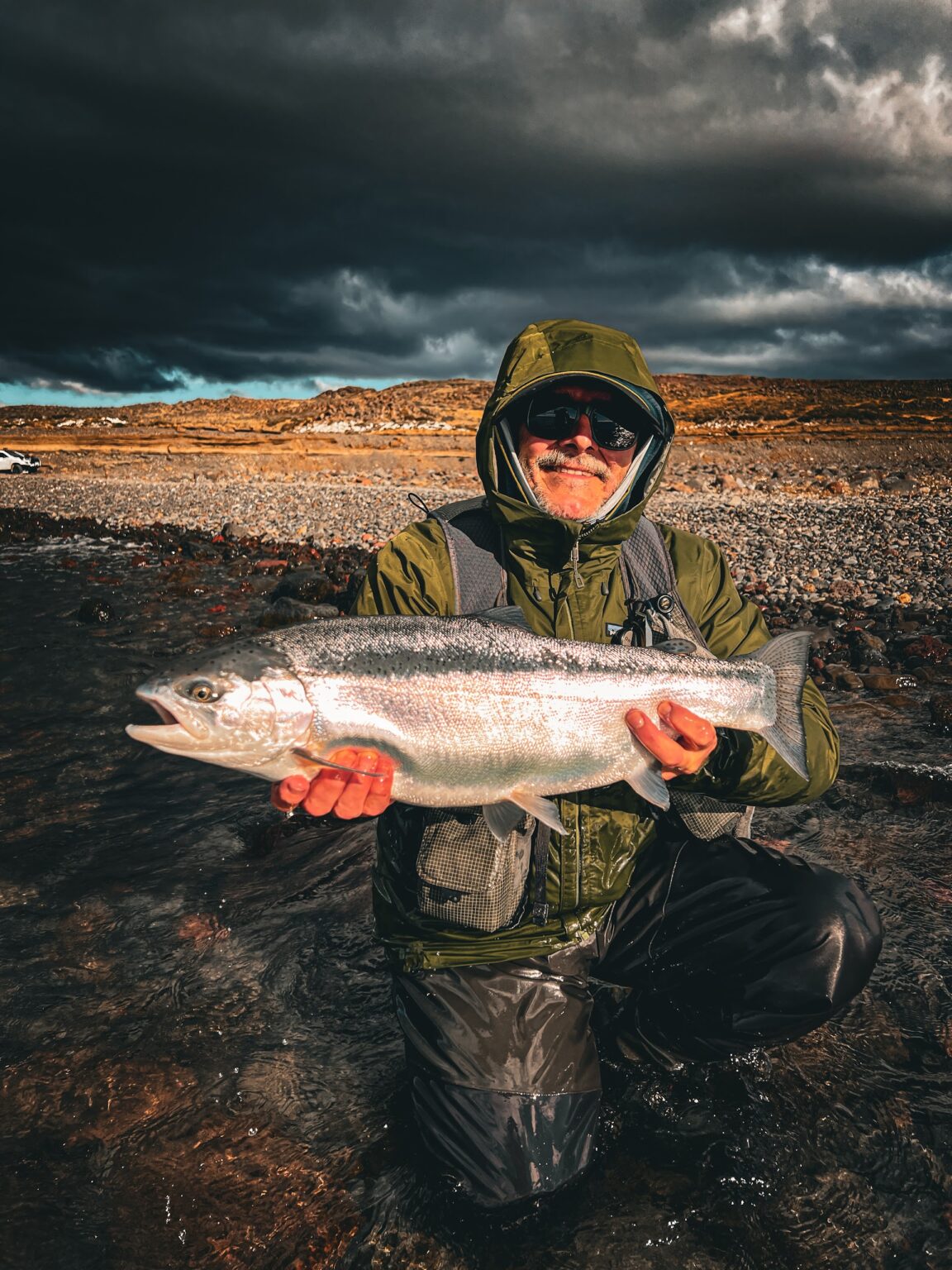
You do not fish for dorado the way you fish for trout, and you do not pack the same bag either. It is the first thing I tell the anglers who join me in northern Argentina: we are going after a fish that grinds steel, finesse can wait. Here is what I carry, and above all what changes from one river to the next, because the dorado of the Paraná and the dorado of the clear waters of Corrientes do not ask for quite the same gear.
Gear that follows the water
Before we talk rods and flies, one thing needs saying: “the dorado” covers several very different kinds of fishing. On the Paraná and its huge side channels, you hunt big fish in big water, often with sinking streamers and tackle built for power. In the province of Corrientes, on the río Corriente and its surprisingly clear waters, the fishing turns visual, sometimes sight fishing proper, and you can lighten up a little. Further north, in the small rivers of Salta like the río Dorado, you walk, you cast short, you look for more modest fish in mountain country wrapped in jungle. The bag adapts to each of these waters.
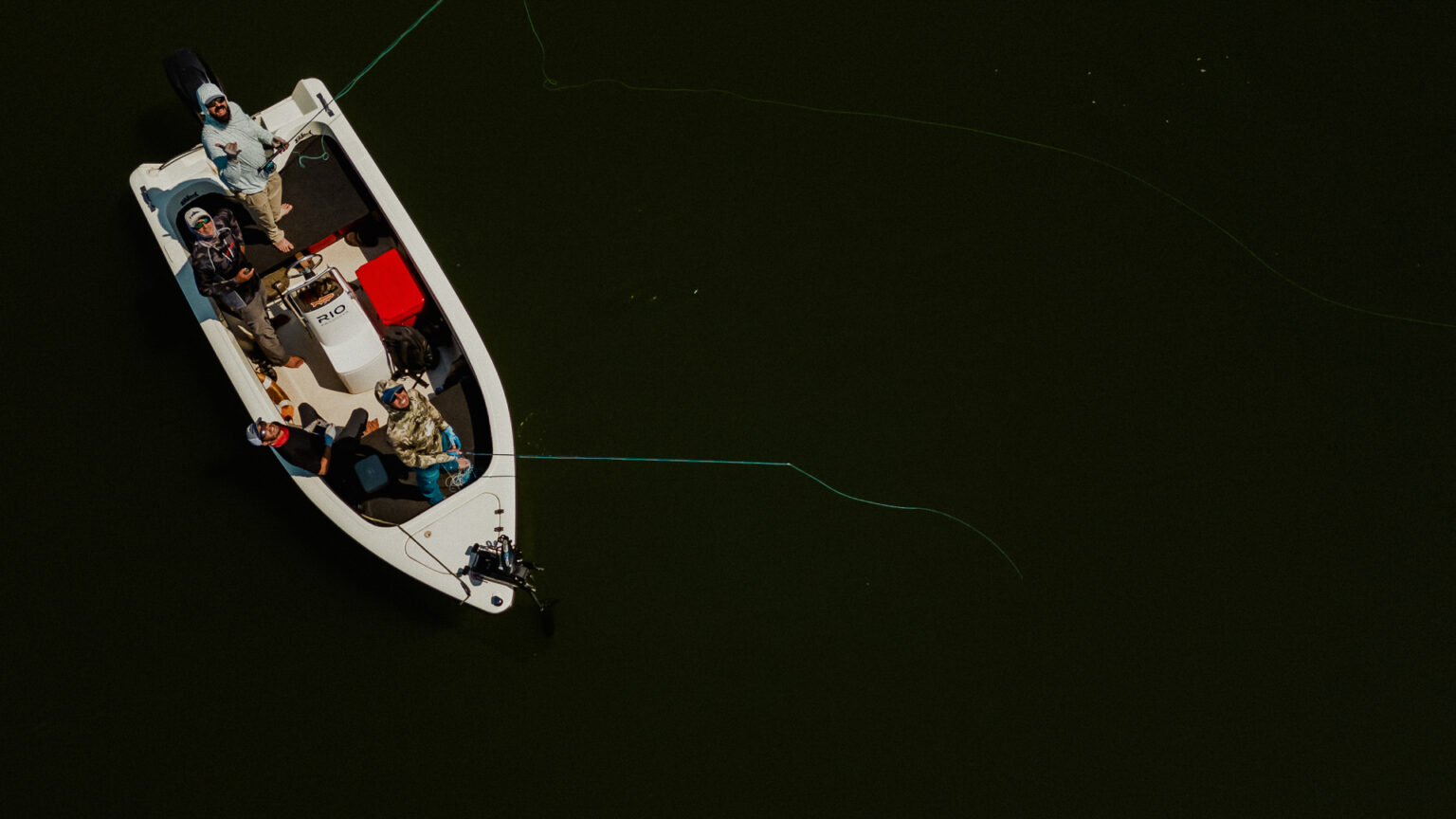
Rods
The do-everything dorado rod is a 9 foot 8 weight, fast action. It throws big streamers into the wind, absorbs the runs and lets you turn a fish bolting for the deadfalls. For the Paraná and its heavy fish, a 9 weight earns its keep on windy days or when the flies get bulky. On the clear waters of Corrientes, where you sometimes fish by sight, a lively 7 or 8 is enough and adds to the pleasure. For the clear water of the río Dorado, plan on a 6, maybe a 7, with adjusted leaders, because a little more discretion is needed there. Always bring a spare rod: a break on the banks of the Paraná, hours from the nearest shop, cannot be fixed.
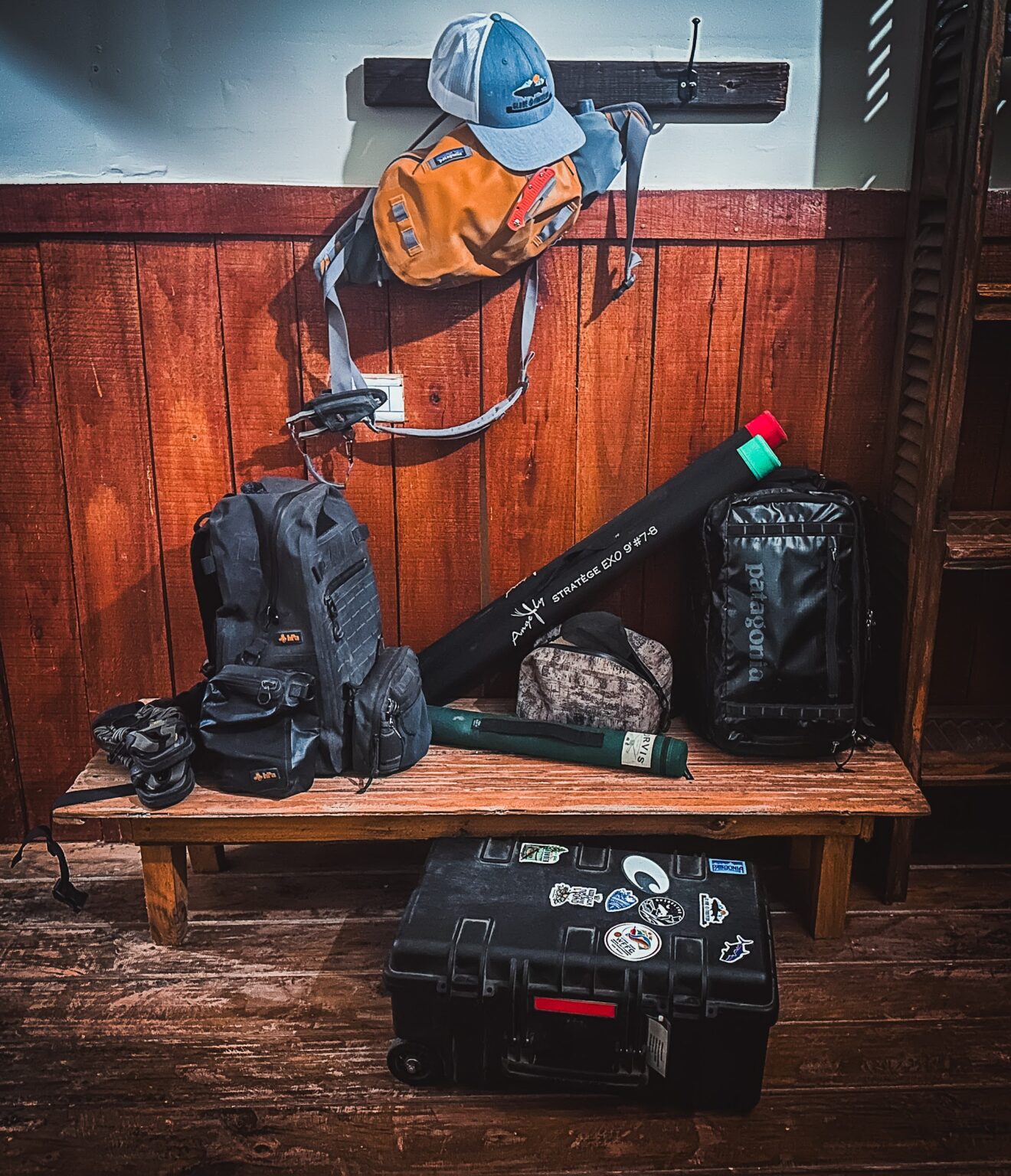
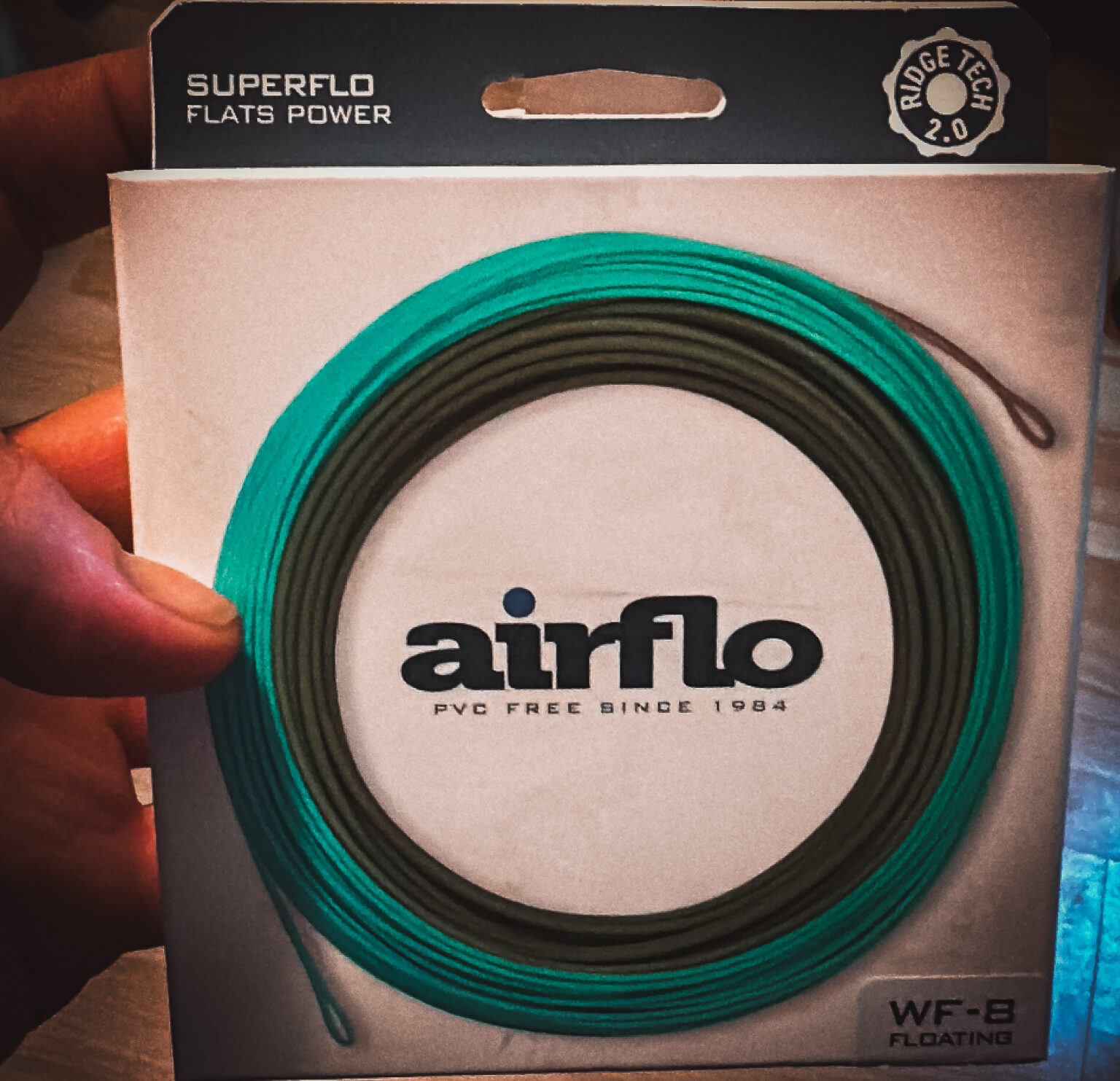
Reels, lines and backing
The reel matters more here than in trout fishing. You want a large spool, a strong and well-sealed drag, and a real reserve of backing: a dorado takes the line and gets into the backing without warning. On the line side, a tropical floating line with an aggressive taper covers most of it, especially in clear water and on the surface; it carries big flies without strain. To reach the deep fish of the Paraná, add a sink-tip line of 300 to 350 grains. On very hot days, standard lines turn soft: the tropical versions keep their body.
Leaders: wire is not optional
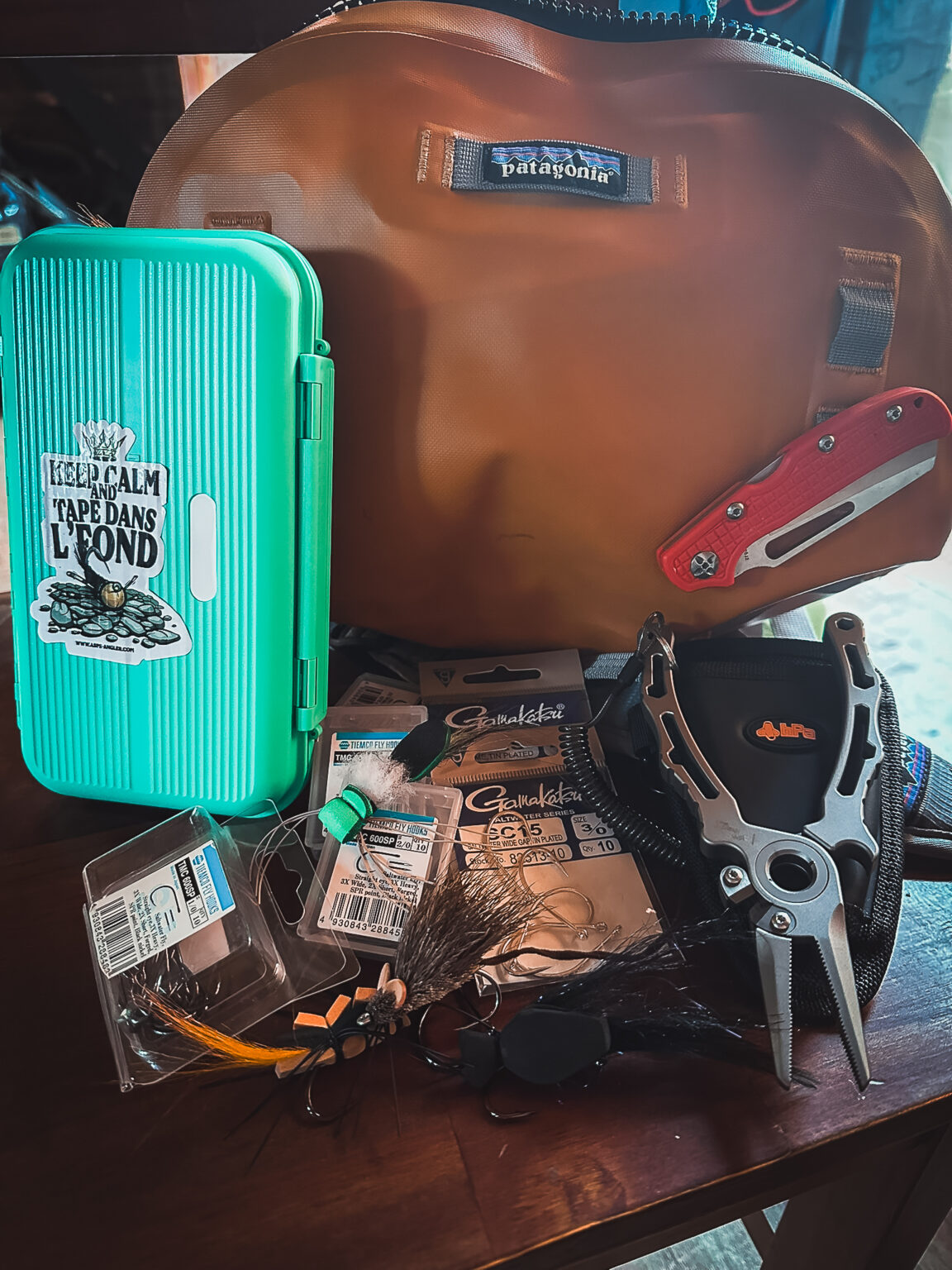
This is the point nobody neglects twice. The dorado has a razor of a jaw and cuts nylon like sewing thread. So you always finish with a shock tippet of supple wire, 20 to 45 pounds, or heavy fluorocarbon when the fish grow wary in very clear water. The body of the leader stays nylon or fluoro of 30 to 40 pounds, short and strong, to turn over heavy flies. Perfect loops on every section, loop to loop between them. Plan to rebuild your leaders several times: you leave some in fish and some in the wood. To attach the flies, use strong streamer clips or a knot on the wire tip.
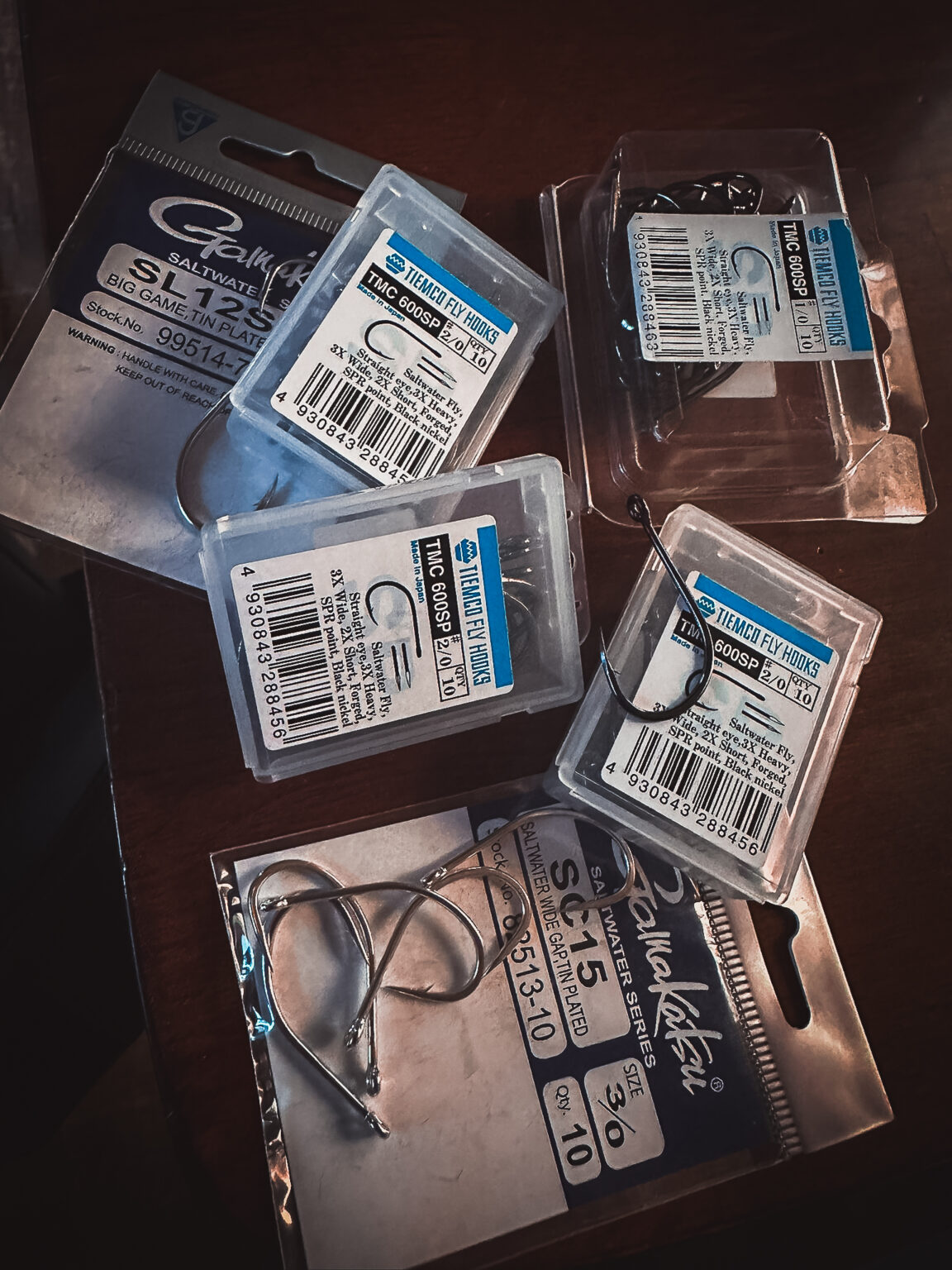
Flies
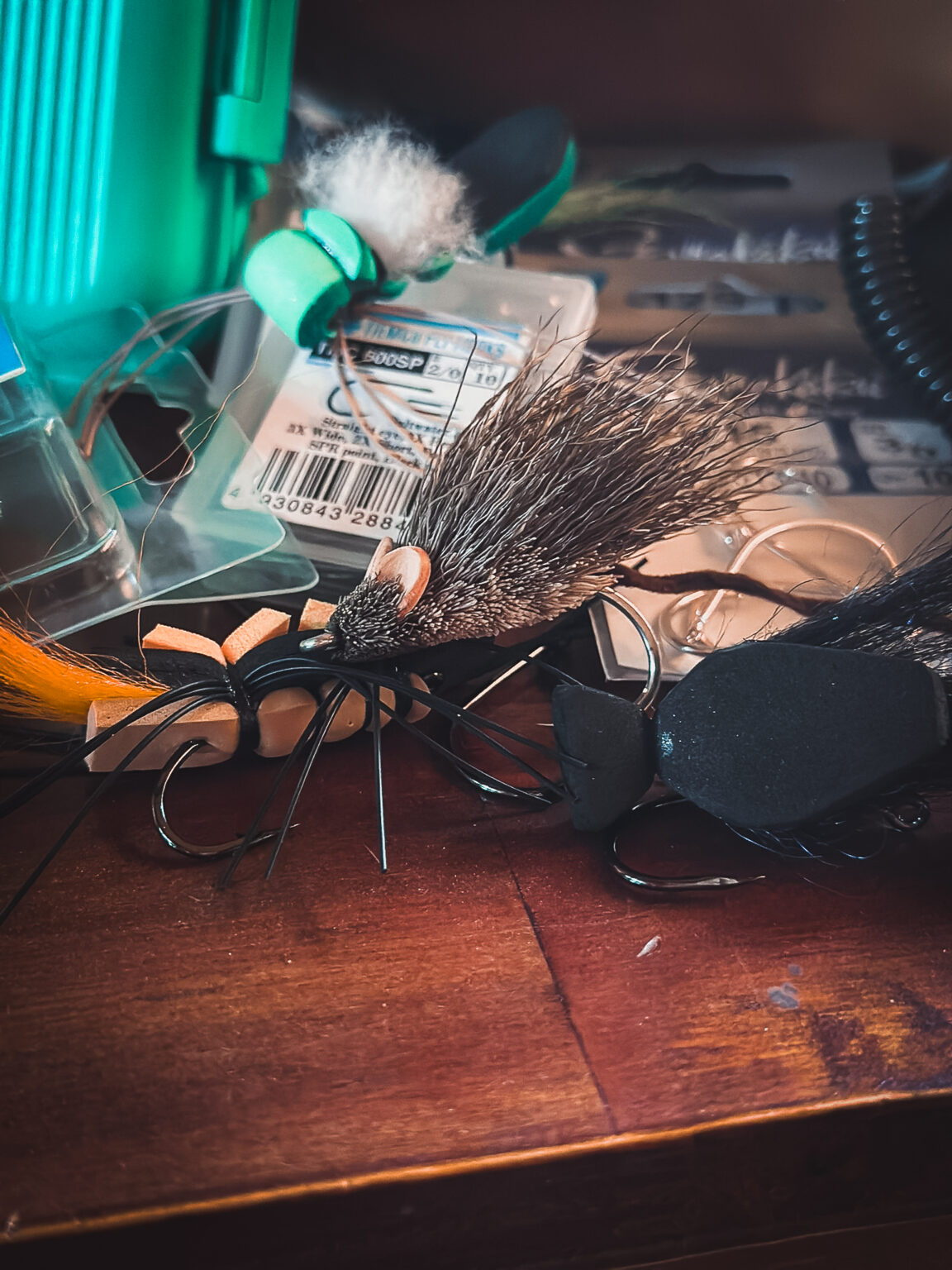
The dorado strikes out of anger as much as hunger, and it likes big mouthfuls. The base is streamers in the Andino deceiver style, tied on strong saltwater hooks from 1/0 to 3/0, five to fifteen centimetres long, in black or in the fire and yellow tones that blaze in stained water. Streamers in black and red or black and purple, with volume and vibration, are a real plus. Most of the time they fish unweighted, the line does the sinking. Add a few poppers, big foam bugs in the Chernobyl style with rubber legs, and mouse patterns for the surface: a dorado attack on a mouse is not something you forget. In clear water, more sober and slightly smaller patterns work better on fish you can see. Bring plenty, you lose a lot. And if you would rather not think about it, the local team can tie a box matched to the season, just ask me before departure.
Clothing and accessories
In northern Argentina, heat and sun set the kit: a long-sleeved UV shirt, a cap with a neck flap, a neck gaiter, and polarised glasses I consider essential for spotting fish and reading the water. Good long-nosed pliers to unhook without getting close to that dentition, tie knots and cut heavy line and wire, a tool that counts for more than you would think. Sunscreen, a water bottle, a dry bag for the boat or a backpack for the walks, and something against the mosquitoes in the wetlands of the Esteros del Iberá or the jungle. One suitcase and one backpack per angler: everyone will thank you in the transfers.
Frequently asked questions
- Which rod if I only bring one?
- A 9 or 10 foot rod with an 8 weight line, fast action. It covers the Paraná as well as the clear waters of Corrientes, from sinking streamers to surface fishing.
- Is the wire leader really mandatory?
- Yes. Without it you will lose the fish of your trip to one clean cut. It is the one item in the bag that is not up for debate.
- Can you buy flies over there?
- Partly, depending on stock. The safest plan is to travel with your own boxes, or to ask me for a kit tied by the local team before departure.
This list goes with the anglers who join me to chase dorado in the province of Corrientes. The trip, the waters and the packages are laid out on the golden dorado fly fishing in Argentina page. And if you are still torn between the dorado of the north and the trout of Patagonia, the two combine very well: write to me and we will talk it over.
Gear: what you really need to fly fish Patagonia
It is the question that turns up in nearly every message before a departure: what goes in the bag? After years of fishing the rivers of northern Argentine Patagonia, this is the list I send to the anglers who travel with me. It is not exhaustive, everyone adjusts it to their own comfort, but it avoids the two classic mistakes: packing too much, and finding out on the water that the one thing you need is missing. Out there the country is remote, and finding tackle can be complicated, sometimes impossible.
Download the full list as a PDF (in French) →
Rods
The all-round rod for this destination is a 10-foot 4 or 5 weight, or a 9’4 to 9’9 in the same range. It does everything: dry fly, European nymphing, sight nymphing, small streamers. Dedicated nymph anglers can bring a 10’4 to 11-foot 3 or 4 weight, deadly on medium rivers though sometimes light on the big currents against strong fish. An 8’6 or 9-foot 4/5 earns its keep on the clear-water stretches, dry fly or sight fishing. For streamer lovers, a 9’6 or 10-foot 6 weight handles the powerful rivers; spey fans can slip in a trout spey of 10’6 to 12 feet in 3/4 or 4/5 to comb the big runs. In every case, pack a spare rod. A breakage ten hours from the nearest shop cannot be fixed.
Reels, lines and leaders
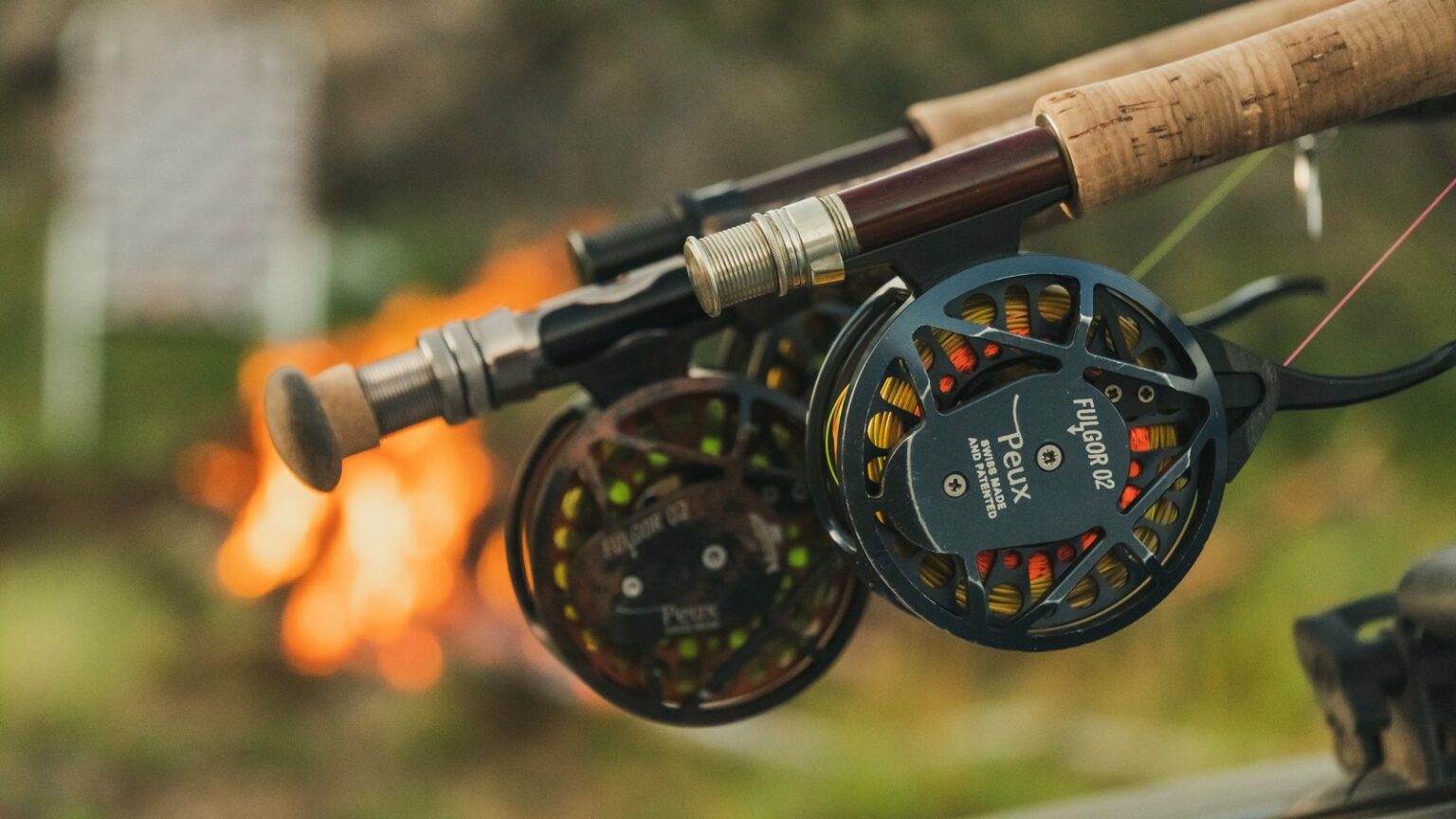
One reel for the all-round rod in 5/6 with a floating line covers most situations; polyleaders save you from carrying several lines. The one point that is not negotiable: a good drag. For European nymphing, bring a dedicated reel loaded with a highly visible coloured nylon in 0.20 or 0.25 mm. For tippet, 0.14 to 0.20 mm covers the essentials, with 0.20 to 0.27 fluorocarbon for streamers. Pack several spare leaders: 9-footers ending in 0.18 or 0.20 mm suit most of the rivers.
Flies
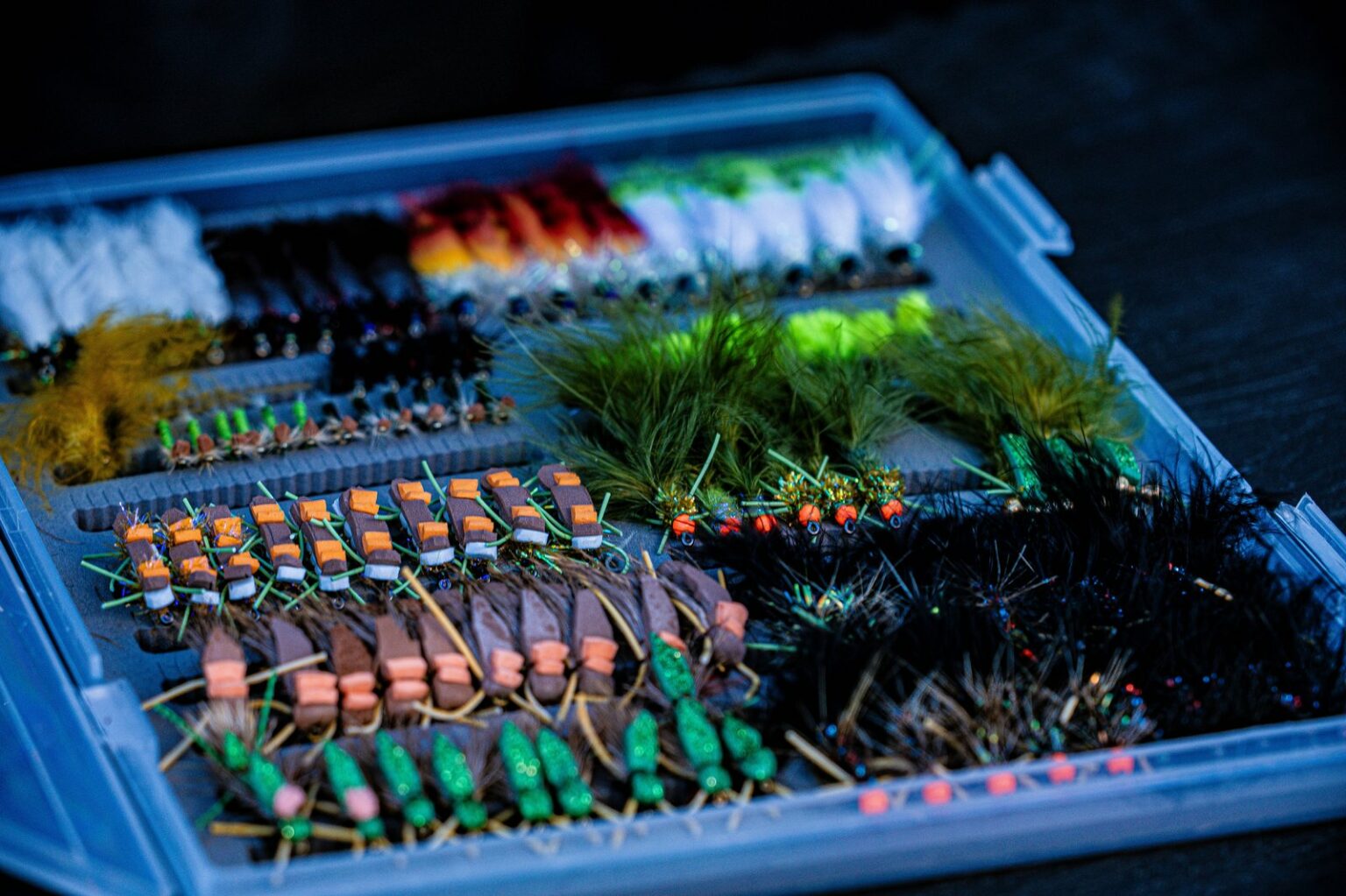
Good news: your box of European dries works very well in Argentina. The classics are enough, one or two of each: yellow-bodied grey duns, CDC patterns, sedges, ants, parachutes. Add the local staples, bulkier, tied on foam or deer hair with silicone legs: Chubby Chernobyl, PMX, Royal Wulff, Adams parachute, crickets and hoppers. For nymphs, your usual perdigons and hare’s ear style patterns do the job, with tungsten beads from 2.5 to 4.5 mm: some rivers push hard and you need weight to get down. Round it out with a few worms, princes and stoneflies. For streamers, marabou and rabbit patterns on long-shank hooks from 8 to 2, unweighted, with a small box of split shot to work them near the bottom in fast water. If you prefer an indicator to the tight line, the New Zealand kit with a bright yarn does the work perfectly. And if you would rather not think about it at all, a fly kit selected by the local team can be prepared before you arrive; just ask me in advance.
Clothing: the wind, the sun, and everything else
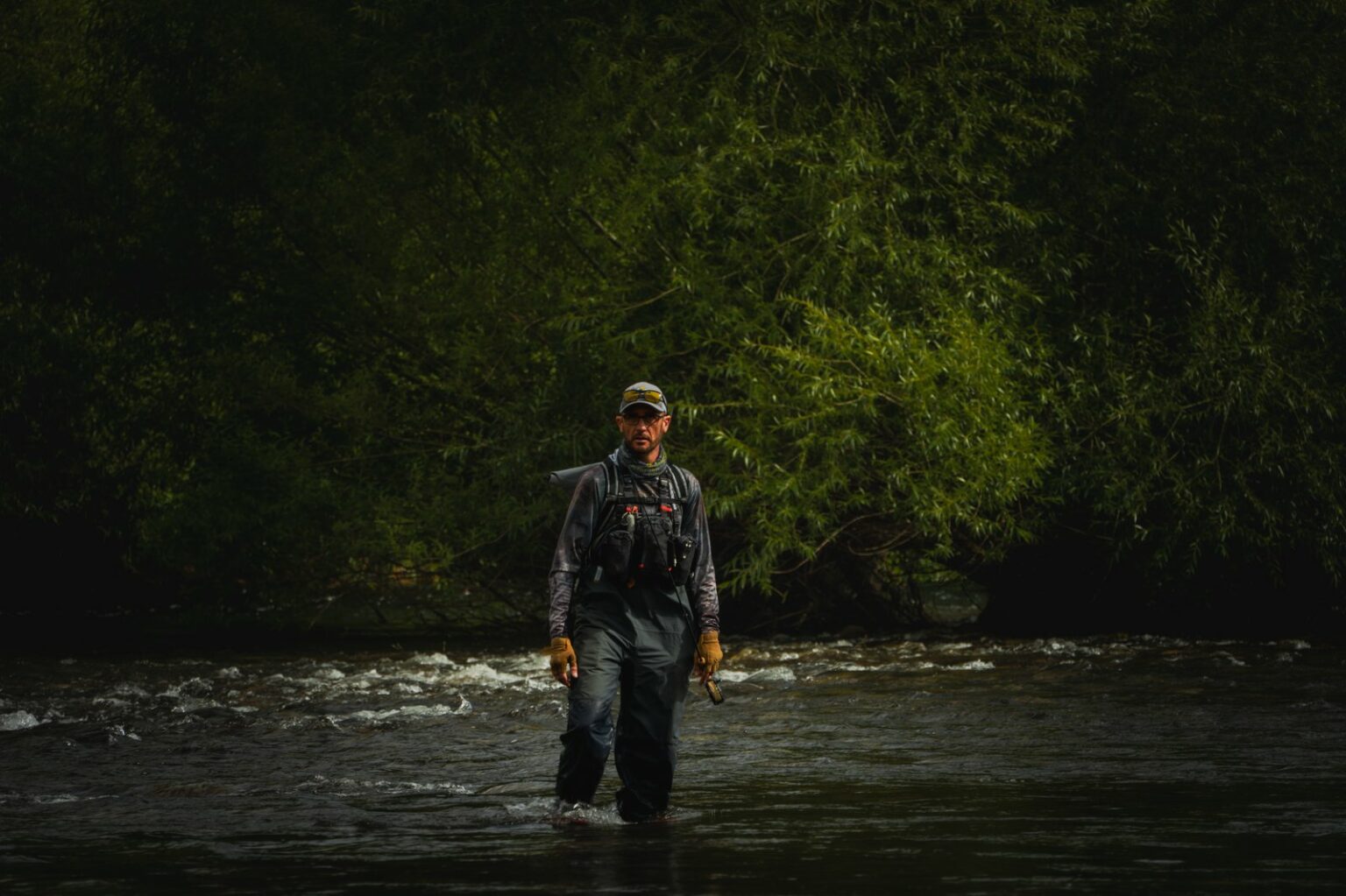
In Patagonia the UV is fierce and the wind almost always plays. The rule is versatility: long-sleeved sun shirts, quick-dry stretch trousers, a cap with a neck flap, a neck gaiter, a waterproof and windproof jacket, warm base layers for wading in the cool hours. For the nights under canvas, a spare set of thermals makes the difference between a good night and a bad one.
Waders and accessories
Waders and wading boots with rubber soles, studded if you like: felt is strictly forbidden in Argentina. The vegetation is hostile and full of thorns, so there are two schools: a very good, tough pair of waders, or a budget pair you can afford to sacrifice. On hot days, neoprene socks with the wading boots and quick-dry walking trousers are enough. Add polarised glasses in category 3 or 4, a vest or chest pack with room for water, a filtering bottle, a dry bag, sunscreen, and repellent if you react to bites, though Patagonia has few mosquitoes. One travel bag per angler plus a backpack: come the transfers, everyone will thank you.
Frequently asked questions
- Which rod should I bring if I only take one?
- A 10-foot 4/5 weight. It is the do-everything rod of this trip: dry fly, tight-line nymphing, sight nymphing and small streamers.
- Can I buy flies over there?
- Partly, depending on stock. The safe play is to travel with your own boxes and, if needed, ask me for a fly kit tied by the local team before departure.
This list goes out to the anglers who join my fly fishing trips to Argentine Patagonia. For Jurassic Lake the gear differs quite a bit, heavier rods first of all: everything is detailed on the dedicated page. A question about your own setup before booking? Write to me.